 The National Democratic Congress (NDC) on Monday said intelligence information gathered suggested that some non-party elements were planning to foment trouble at its Delegates Congress to be held from December 20 to December 22. A statement issued in Accra and signed by Mr Johnson Asiedu-Nketiah, General Secretary of NDC, said some people who did not belong to the Party had planned to "infiltrate the ranks of the Party members with the aim to create confusion at the Congress”. It is intended to drag the name of NDC into the mud and portray it as a violent party in the eyes of the electorate. It said the NDC was also aware that some journalists of some radio stations have been recruited to blow trivial issues out of proportions just to cause panic and instigate violent reactions from supporters of aspirants. "We appeal to these journalists not to engage in such diabolical act and hope that station managers and presenters will verify complaints and reports from their reporters and callers before broadcasting. "We hope that these efforts would not only ensure a successful NDC congress but also deepen the country's growing democracy," the statement said. It said the National Planning Committee of the Party wished to advise all such detractors, who have the intention of creating violence to disrupt the congress to stay away. The statement said the Party had informed the security agencies about the issue adding that adequate measures had been taken to guarantee the safety of all members. In another development following a meeting the NDC had with the Police Administration on Monday, the Police would be in full control of security at the Congress.GNA
News from Ghana,the African Sub-Region and More!
18.12.06
NDC Congress will be smooth and peaceful -
The National Democratic Congress (NDC) on Monday said intelligence information gathered suggested that some non-party elements were planning to foment trouble at its Delegates Congress to be held from December 20 to December 22. A statement issued in Accra and signed by Mr Johnson Asiedu-Nketiah, General Secretary of NDC, said some people who did not belong to the Party had planned to "infiltrate the ranks of the Party members with the aim to create confusion at the Congress”. It is intended to drag the name of NDC into the mud and portray it as a violent party in the eyes of the electorate. It said the NDC was also aware that some journalists of some radio stations have been recruited to blow trivial issues out of proportions just to cause panic and instigate violent reactions from supporters of aspirants. "We appeal to these journalists not to engage in such diabolical act and hope that station managers and presenters will verify complaints and reports from their reporters and callers before broadcasting. "We hope that these efforts would not only ensure a successful NDC congress but also deepen the country's growing democracy," the statement said. It said the National Planning Committee of the Party wished to advise all such detractors, who have the intention of creating violence to disrupt the congress to stay away. The statement said the Party had informed the security agencies about the issue adding that adequate measures had been taken to guarantee the safety of all members. In another development following a meeting the NDC had with the Police Administration on Monday, the Police would be in full control of security at the Congress.GNA
Armed robbery rate drops
 Crime statistics indicate that armed robberies have decreased dramatically in the last quarter of this year as compared to last year, the Police confirmed on Monday.The downward trend has been the result of a number of proactive measures put in place by the Police administration.Mr. Albert Kan Dapaah, Minister of the Interior, Minister for National Security, Mr Francis Poku and Mr Isaac Boafo, Deputy Minister of Defence confirmed this when they took turns to address an emergency National Police Commanders Conference in Accra.Mr. Patrick Acheampong, Inspector General of Police said the meeting was to review plans agreed upon in the year and exchange ideas on ways to make the fight against violent crimes more effective.He said, "It is now evident that, we now have a relatively calm nation where most regions experience little or no violent crimes for long periods, compared to the peak period between 1997 and 2001 when violent crimes particularly armed robberies were rampant and common throughout the country".He said, despite the relative calm, areas like Accra, Tema and Kumasi still experienced pockets of violent crimes, hence the meeting. Mr. Acheampong said both operational and administrative concerns would be considered to enablethe police to render greater service of satisfaction to Ghanaians. Giving the overview, Dr. Kofi Kesse Manfo, Deputy Inspector General of Police in-charge of Operations said in 2005, 1,399 robberies were recorded nationwide, of which Greater Accra and Ashanti Regions recorded over 77 percent, while the rest were recorded in the other eight regions."A comparison of monthly statistics for the years 2005 and 2006 shows a substantial reduction in cases recorded in the first two months and the last quarter of 2006."The first two months showed reduction of 13.3 per cent and 45.2 per cent respectively over those of 2005."Dr Manfo said between March and August this year, there were substantial increases over those of 2005, while the September to November figures for 2006 reduced to an aggregate of 37.4 per cent. He said the Police would not relax on its oars but institute measures like public education, intelligence gathering, cultivation of informants, neighbouring watch on criminals, and selective swoops, among others, to check crime.He said, apart from reinforcing those measures, Regional, Divisional and District Commanders were charged to put in place extra measures to check criminal activities. Dr Manfo said additionally, Police had set up some barriers to make them more operational, whilst patrols were mounted at sensitive installations.He said the Police would continue to seek public assistance in curbing robberies by offering reliable information about suspects and known criminals.In his remarks Mr. K an Dapaah said in spite of the cocaine saga and the shooting incidents at Dansoman and Kotobabi the Police had emerged strongly and commended the Inspector General of Police for his performances up to date.He said as the country approaches the New Year, new challenges might emerge and the Police should wake up to the occasion. Mr. Kan Dapaah said though robbery levels had come down there was the need to educate the public on perception crime in ccordance with the statistics. He said government acknowledged the difficulties the Police faced in terms of logistics and would work to resource the service.Mr. Poku said the challenges were prelude to success adding, "I believe the IGP is capable to handle the security of the state". He said National Security would continue to support the Police with all the intelligence, especially with the approach to the Golden Jubilee anniversary and other major conferences Ghana was to host next year. Mr. Boafo acknowledged the efforts of the Police to maintain law and order despite its logistical constraints, adding that the security agencies would continue to collaborate in the combat against crime.
Source:GNA
17.12.06
Ghana needs leaders with character capacities
 The Chairman of Databank, Mr. Ken Ofori Atta on Saturday said Ghana needs leaders with character capacities to persevere and move the country forward.It is through character that enabling virtues and integrity, humility excellence and selfless service into our lives and community are engendered, he said.Mr. Ofori Atta was addressing the 2006 year graduates of Ashesi University College at the occasion in Accra.It was the second graduating class since the establishment of the University during which 31 students undertook courses in Computer Science and Business Administration He said character was crucial because "it empowers our capacities while keeping them in check. It differentiates those who abuse power and those who steward it."He said the leadership crisis in Africa and for that matter, Ghana remains quite grave and that this era requires inspired leadership to move the country forward.Mr. Ofori Atta urged the graduates to take advantage of the economic stability the country was enjoying and deploy the software of scholarship the university had given them "to engage our society in order to rebuild the economy, strengthen the moral character of our nation and to clearly define and establish a collectively owned vision of a good society." You are to think through your society's intractable problems and solve them as it is captured in Ashesi's crest: Scholarship, Leadership and Citizenship" he added.He said the graduates are to accelerate with boldness our journey to a middle-income country and are capable to straddle the complex demand of globalisation with the realization of the good society for Ghana @50 years.Dr. Patrick Awuah, founder and President of the University on the occasion said each of the graduates were product of a distinctive educational experience that compels them to be analytical, to be unafraid of ambiguity, and to hold firm to the highest standards of personal and academic conduct.Dr. Awuah said the process of learning about the universe and the human condition was the very foundation upon which truly inspired leadership was built, adding, "the search for new insights about our world is the basis for wisdom, and as such is a necessary condition for great leadership and meaningful citizenship." He said that the ability to be an effective leader would depend on personal attributes such as integrity, compassion and commitment. He therefore, urged the graduands to hold fast to the values they have learnt as they go out into the world of work and rise to the occasion when leadership was thrust upon them. 16 Dec. 06
Source:GNA
Amoateng’s Fate To Be "Finally" Decided…
 The Speaker of Parliament, Ebenezer Begyina Sekyi-Hughes has directed that concerns on the prolonged absence of Eric Amoateng, NPP MP for Nkoranza North should be settled with the leadership of the House. The directive was in response to questions raised by Alfred Agbesi- NDC-Ashaiman and Haruna Iddrisu, NDC Tamale South, on what the House intended to do about the long absence of the member of the House.Eric Amoateng and another Ghanaian Nii Okai Adjei are facing charges of conspiracy to transport and distributing heroin in the United States contrary to Federal Law and have both pleaded not guilty. Meanwhile Parliament on Friday rose for the Christmas break and is expected to reconvene on January 30, 2007. Five outstanding Bills have been scheduled to be considered during the next Meeting of Parliament.The bills are the Criminal Code (Amendment), the Domestic Violence, the Transfer of Convicted Persons, the Data Processing Control Board Decree (Repeal), Central Securities Depositary and the Restriction on the Use of Military Uniforms and Equipment (Amendment) Bills.Mr Felix Owusu-Adjapong, Majority Leader and Minister of Parliamentary Affairs, listed the outstanding Bills when he presented the proposed business statement for the first week of the next meeting. The Minister said all outstanding business and referrals, which were not completed at the end of the Second Session, would be referred to the succeeding meeting. He said work would be carried out on the electrical system of the Chamber Block during the recess.Meanwhile, the Ghana Centre for Democratic Development (CDD-Ghana) on Friday presented to Parliament a copy each of the Hansard from January 1993 to December 1995, and proceedings of the Consultative Assembly, that drafted the 1992 Constitution, 40 pocket size copies of the 1992 Ghanaian Constitution and two reference copies of Erskine May on Parliamentary Practice.
Source:GHP
6.12.06
TANZANIA ENJOYS FRUITS OF CO-OPERATION
By Rebecca Wanjiku,
When Peter Ulanga was invited to visit Brazil, last year, he knew that something was going to change in the management of dot Tz country code Top Level Domain (ccTLD).
Ulanga, and a colleague, Peter Shilla, benefited from training offered by the Brazilian government on management of domain name registries using open source software.
Within two years of the training, Tanzania Communications Regulatory Authority is ready to launch the dot Tz ccTLD registry. The domain has been administered by the University of Dar es Salaam and individuals.
`The training worked well, we have bought necessary equipment and we are ready to launch Tanzania Network Information Centre, TzNIC,` said Ulanga.
Ulanga says that the training was useful and the tests were successful. He added that it will now be easier to register domains and if there are any problems, then there is a central point to channel complaints.
Tanzania benefitted from the south/south solidarity spearheaded by the South American power house. Kenya was the first to train on how to use the software, Tanzania soon followed suit, while Mozambique and Sudan are lining up for the services.
The gesture by the Brazilian government was calculated to ensure that Africa can access the less costly open source software solutions and transform African registries from manual to automation.
At the on-going Internet Corporation for Assigned Names and Numbers(ICANN) conference, in Sao Paulo, renowned Brazilian Professor Hartmut Glaser could not hide his joy while confirming that he had been invited by the Tanzanian government to witness the fruits of his government´s generosity.
Apart from the training, Brazil offered technical assistance to the recipient countries in case of any problems with the software or even any technical hitches in their operations.
The drive to foster south/south cooperation started in 2002 when Brazil sent engineers to Togo to train local counterparts from more than 20 countries gathered in Lome.
Ends
When Peter Ulanga was invited to visit Brazil, last year, he knew that something was going to change in the management of dot Tz country code Top Level Domain (ccTLD).
Ulanga, and a colleague, Peter Shilla, benefited from training offered by the Brazilian government on management of domain name registries using open source software.
Within two years of the training, Tanzania Communications Regulatory Authority is ready to launch the dot Tz ccTLD registry. The domain has been administered by the University of Dar es Salaam and individuals.
`The training worked well, we have bought necessary equipment and we are ready to launch Tanzania Network Information Centre, TzNIC,` said Ulanga.
Ulanga says that the training was useful and the tests were successful. He added that it will now be easier to register domains and if there are any problems, then there is a central point to channel complaints.
Tanzania benefitted from the south/south solidarity spearheaded by the South American power house. Kenya was the first to train on how to use the software, Tanzania soon followed suit, while Mozambique and Sudan are lining up for the services.
The gesture by the Brazilian government was calculated to ensure that Africa can access the less costly open source software solutions and transform African registries from manual to automation.
At the on-going Internet Corporation for Assigned Names and Numbers(ICANN) conference, in Sao Paulo, renowned Brazilian Professor Hartmut Glaser could not hide his joy while confirming that he had been invited by the Tanzanian government to witness the fruits of his government´s generosity.
Apart from the training, Brazil offered technical assistance to the recipient countries in case of any problems with the software or even any technical hitches in their operations.
The drive to foster south/south cooperation started in 2002 when Brazil sent engineers to Togo to train local counterparts from more than 20 countries gathered in Lome.
Ends
Finding Unity in Diversity
By Rebecca Wanjiku
African participants at Internet Corporation for Assigned Names and Numbers(ICANN) meeting in Sao Paulo have formed a unified body that with articulate issues from participants drawn from various sectors.
Africa Regional At Large Organisation (AFRALO) will unite users wishing to articulate their issues to ICANN. AFRALO is expected to link Africa to the global At Large Organisation within ICANN.
Alice Munyua, a member of ICANN´s At Large Organisation says AFRALO will help Africa identify their peculiar issues and call attention to the global body.
¨Through the regional body, African users can identify their challenges and design ways to deal with them. For instance, if the fibre optic cable is laid, then more people can access the internet and then we can deal with other problems other than access,¨said Munyua.
With the growing mobile telephony and cutting edge technology that provides internet via mobile, Munyua says AFRALO will ensure that African voices are heard.
Though not officially launched, preparations of a Memorandum of Understanding are in top gear.
AFRALO is expected to face challenges of language and culture, multiplicity and diversity of digital challenges. Some countries are deemed to have developed ICT infrastructure while others have not.
Munyua expects all countries to meet and point out issues that affect all sectors and the changes they would like to see. The country representatives/ liasons will forward to AFRALO which will then link with the global body.
She recognises that it will be hard to reach consensus because of the diverse interests but she promises AFRALO will work hard to adequately represent african users.
Latin America and the Caribbean have already formed LAC-RALO ( Latin America and the Caribbean Regional At-Large Organisation) which is expected to maximize participation of user groups from the region
Paul Twomey ICANN president, told delegates during the opening ceremony that LAC-RALO will be the third Latin American organisation to help ICANN in its work. The other two are LACTLD (Regional ccTLD managers) and LACNIC (Regional Internet Registry for Latin America ).
Ends
African participants at Internet Corporation for Assigned Names and Numbers(ICANN) meeting in Sao Paulo have formed a unified body that with articulate issues from participants drawn from various sectors.
Africa Regional At Large Organisation (AFRALO) will unite users wishing to articulate their issues to ICANN. AFRALO is expected to link Africa to the global At Large Organisation within ICANN.
Alice Munyua, a member of ICANN´s At Large Organisation says AFRALO will help Africa identify their peculiar issues and call attention to the global body.
¨Through the regional body, African users can identify their challenges and design ways to deal with them. For instance, if the fibre optic cable is laid, then more people can access the internet and then we can deal with other problems other than access,¨said Munyua.
With the growing mobile telephony and cutting edge technology that provides internet via mobile, Munyua says AFRALO will ensure that African voices are heard.
Though not officially launched, preparations of a Memorandum of Understanding are in top gear.
AFRALO is expected to face challenges of language and culture, multiplicity and diversity of digital challenges. Some countries are deemed to have developed ICT infrastructure while others have not.
Munyua expects all countries to meet and point out issues that affect all sectors and the changes they would like to see. The country representatives/ liasons will forward to AFRALO which will then link with the global body.
She recognises that it will be hard to reach consensus because of the diverse interests but she promises AFRALO will work hard to adequately represent african users.
Latin America and the Caribbean have already formed LAC-RALO ( Latin America and the Caribbean Regional At-Large Organisation) which is expected to maximize participation of user groups from the region
Paul Twomey ICANN president, told delegates during the opening ceremony that LAC-RALO will be the third Latin American organisation to help ICANN in its work. The other two are LACTLD (Regional ccTLD managers) and LACNIC (Regional Internet Registry for Latin America ).
Ends
calling African Scholars
Calling African Scholars
By Rebecca Wanjiku
African scholars interested in developing and preserving indigenous languages have been challenged to take the lead in the Internationalised Domain Name (IDN) debate.
Prof. Maxime Z. Somé, from the University of Ouagadougou in Burkina Faso called on African linguists to actively participate in the IDN project.
`Scientists and scholars should constitute themselves as an exceptional authority in African affairs and move the project forward, said Some.
Some is concerned that Cambodia, Japan, China, Korea and Arabic countries seem to be moving at a faster pace and leaving Africa behind.
In his opinion, linguistic experts as well as scientists in Africa should work together and move the agenda forward. He added that the IDN project requires linguists to agree on the language and terminologies of a particular language and the scientists to work on the technological aspects.
After the agreement of the scripts and language tables, the UNICODE consortium, which consists of computer makers and other bodies, will be expected to integrate the languages into most computers sold to the Africa region.
In this regard, if I have a computer, I can choose the language to use, just like I select to use French or German. In the case of French, the computer inserts the right accents and other letters that may not be available in the English key board.
Asked whether this will lead to development of many key boards, Some says experts can work on some regional languages like Bambara, used in Guinea, Mali, Ivory Coast and Burkina Faso or Fulani, used in Nigeria, Senegal, Mauritania and Mali.
`We know that this project requires a lot of financial commitment and big businesses are not going to invest if not assured of profits. That leaves governments, which have been very non committal, ` he adds.
But he maintains that scholars can jumpstart the process by learning from other countries where experts volunteered their services for the sake of development.
Some spoke at the ongoing Internet Corporation for Assigned Names and
Numbers (ICANN) meeting in Sao Paulo, where the urgency of IDNs has taken
centre stage and its proponents are touting it as a solution to communication problems.
While there are workshops and follow-up meetings to discuss and update on issues relating to IDNs, Africa is stuck with the obsession of listing its numerous cultural and logistical problems as the hindrance to IDN progress.
In 2004, Adama Samassekou, head of the African Academy of Languages was quoted saying there was lethargy within African leadership to use local languages even at Africa Unity meetings Swahili was recommended in 1986
but was used at the AU meeting in July 2004. Swahili is widely spoken in 15
East and Central African countries.
Ends
By Rebecca Wanjiku
African scholars interested in developing and preserving indigenous languages have been challenged to take the lead in the Internationalised Domain Name (IDN) debate.
Prof. Maxime Z. Somé, from the University of Ouagadougou in Burkina Faso called on African linguists to actively participate in the IDN project.
`Scientists and scholars should constitute themselves as an exceptional authority in African affairs and move the project forward, said Some.
Some is concerned that Cambodia, Japan, China, Korea and Arabic countries seem to be moving at a faster pace and leaving Africa behind.
In his opinion, linguistic experts as well as scientists in Africa should work together and move the agenda forward. He added that the IDN project requires linguists to agree on the language and terminologies of a particular language and the scientists to work on the technological aspects.
After the agreement of the scripts and language tables, the UNICODE consortium, which consists of computer makers and other bodies, will be expected to integrate the languages into most computers sold to the Africa region.
In this regard, if I have a computer, I can choose the language to use, just like I select to use French or German. In the case of French, the computer inserts the right accents and other letters that may not be available in the English key board.
Asked whether this will lead to development of many key boards, Some says experts can work on some regional languages like Bambara, used in Guinea, Mali, Ivory Coast and Burkina Faso or Fulani, used in Nigeria, Senegal, Mauritania and Mali.
`We know that this project requires a lot of financial commitment and big businesses are not going to invest if not assured of profits. That leaves governments, which have been very non committal, ` he adds.
But he maintains that scholars can jumpstart the process by learning from other countries where experts volunteered their services for the sake of development.
Some spoke at the ongoing Internet Corporation for Assigned Names and
Numbers (ICANN) meeting in Sao Paulo, where the urgency of IDNs has taken
centre stage and its proponents are touting it as a solution to communication problems.
While there are workshops and follow-up meetings to discuss and update on issues relating to IDNs, Africa is stuck with the obsession of listing its numerous cultural and logistical problems as the hindrance to IDN progress.
In 2004, Adama Samassekou, head of the African Academy of Languages was quoted saying there was lethargy within African leadership to use local languages even at Africa Unity meetings Swahili was recommended in 1986
but was used at the AU meeting in July 2004. Swahili is widely spoken in 15
East and Central African countries.
Ends
Subscribe to:
Comments (Atom)
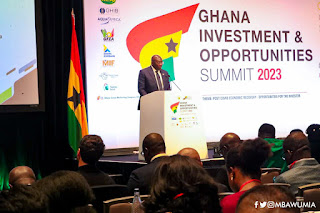
Ghana is back on track with investment opportunities - Veep woos foreign investors
Accra, June 6, GNA-Vice President Mahamudu Bawumia says Ghana's economic opportunities for private sector investors are back on track as...
-
 John E.A Mills died today at a Military Hospital in Ghana. He was 68. He became Ghana's President in 2009 after winning a general ...
 -
 A number of African Heads of State have started arriving in Accra to attend the second conference of the "Partnership with Africa...
 -
 The National Media Commission (NMC) has reconstituted the Board of Directors for State-Owned Media organisations in consultation with Presi...