The Association of Ghana Industries (AGI) has asked government to grant all domestic manufacturing start-ups a five-year tax holiday while it takes steps to impose a minimum duty of 20 per cent on imported finished products which could be manufactured locally.
Similarly, the association is calling for a special tax to be put on all advertisements of imported finished goods.
These recommendations are part of AGI's proposals for consideration into the 2007 Budget to be presented on Thursday November 16. Briefing members of the Parliamentary Select Committees on Trade, Industry and Tourism and Finance,
on the proposals, Mr Tony Oteng-Gyasi President of AGI said the time had come for government to adopt deliberate policies to encourage domestic manufacturing firms to contribute to the growth of the economy.
This, he said, was necessary to ensure that domestic companies did not only reduce their cost of doing business but also improved their productivity to stand the competition in the global environment.
"Any measure that will encourage manufacturing companies to increase their contribution to the national economy is welcomed," he said. Mr. Oteng-Gyasi said AGI was seeking the withdrawal of duty on all imported raw materials because imposition of taxes at the production stage turned to increase the cost of manufacturing and make the goods uncompetitive to imported ones.
He said the association held the view that shifting the tax from production to consumption would drastically reduce the cost of business and make the companies to become competitive.
Other concerns of the AGI are the delay in the payment of duty drawback, which it said, should be fast tracked, abolishing of the national Reconstruction Levy and other charges that it said, were impacting negatively on their cash flow.
Mr. Oteng-Gyasi also drew attention to high GCNet charges and called on government to abolish the ad valorem charges and fixed a minimum and maximum levels
of fees that could be paid by the importers.
He urged the Parliamentarians to study the Association's proposals and bring their concerns raised to bear on the debate on the budget on the floor of the House.
GNA

News from Ghana,the African Sub-Region and More!
14.11.06

Bold budget expected
On Thursday, Kwadwo Baah-Wiredu will read the national budget statement on how taxpayers' funds, loans and grants will be spent next year and the government's plans to raise money to sponsor its programmes for the year.
Beyond the usual budgetary contents, the special thematic areas for the 2007 budget are a comprehensive public sector salary structure, immediate and long-term solutions to Ghana's energy crisis, and a refreshingly bold diversification of the government's sources of funding its expenditure. Public spending is expected to exceed the ¢45 trillion projected for 2007 in this year's budget. It is expected to hit ¢50 trillion (from ¢42 trillion in 2006), making it one of the biggest inflation-indexed increases ever in the country's history.
Top on the agenda is how Government aims to fill the massive funding gap in the country's development agenda. This year, for example, the various governmental sectors said they needed over ¢80 trillion to implement their ordinary programmes. In the final analyses, the system could raise just about half of that amount, with only about ¢27 trillion of that from total revenue (taxes and other domestic funds), and the rest from bilateral and multilateral loans and grants.
But, in an exclusive interview with The Statesman yesterday the Minister of Finance and Economic Planning disclosed a significant historic dimension to Government's funds mobilisation exercise beyond the traditional sources such as the IMF, World Bank, and bilateral arrangements.
He says that a huge chunk of what is required to undertake government projects, particularly social infrastructure, can be expected to be sourced from the international money market, exploiting Ghana's attractive sovereign credit rating of B+.
This, some analysts believe, can easily add about $1 billion a year to the development kitty, depending on how boldly President John Agyekum Kufuor and his finance minister are prepared to act.
But the signs are good. In mid-October, the African Development Bank, in collaboration with Standard Chartered Bank, made the first ever Eurobond issue with the cedi. They expected to raise $20-$30 million in the two-day issue. They ended up selling $45million of the two-year fixed rate Eurobond, after the issue was encouragingly oversubscribed.
"We had to cut it off when the book size reached $45 million," said Ade Adebajo, director, debt capital markets-Africa at Standard Chartered. "It is the capital market that is best equipped to provide the long-term capital that is needed for our infrastructure needs as well as the needs of the private sector," Deputy Finance Minister Anthony Osei Akoto remarks. On the local front, Government of Ghana Bonds were this year traded for the first time on the Ghana Stock Exchange, another commitment made in the 2006 budget to deepen the local capital market included a commitment to use the Accra bourse as the preferred mechanism for the divestiture of state enterprises; and supporting the Securities and Exchange Commission to develop and strengthen regulation of the over-the-counter market. The process is ongoing to list the State Insurance Company and Ghana Oil Company on the bourse.
Also speaking to The Statesman yesterday, Osei Akoto says the budget will make provisions for dealing with the country's energy crisis. Newmont, AngloGold Ashanti and Goldfields are among the leading companies projecting significant reductions in profits this year due to the current load-shedding in electricity. But, checks made by The Statesman indicate that small and medium size enterprises are taking even greater financial hits, especially in the manufacturing sector.
The Deputy Minister says "We need to deal with the short-term problems to assure improvements in power supply." He also hinted that Government's recent gesture to absorb the latest tariff increases will not be sustained. "We cannot continue to absorb tariff adjustments."
His boss added that for the medium to long term, the Bui Dam project will be on stream. Also, the budget will signal a bold attempt by Government in the search and application of alternative sources of energy, Mr. Baah-Wiredu says. He further disclosed that in line with calls, including the latest from the Okyenhene, for a greater level of decentralised empowerment, Government is to undertake a radical decentralisation of public departments, which is expected to streamline financial administration and enhance overall efficiency in governance.
In line with this, the Local Government Council is organising this week a three-day strategic communication workshop for Chief Directors and Directors of Ministries, Departments and Agencies to discuss their integration into the Metropolitan, Municipal and District Assemblies.
The MDAs are to be classified under 11 decentralised departments. This should substitute the current system of deconcentration into one of devolution, with functions previously performed by branches, divisions or units of the departments to be transferred to the assemblies, the capacity of which are to be enhanced.
Government is expected to learn lessons from the implementation of the Public Procurement Act, 2004, which has been fraught with problems. Though welcomed as an excellent law against corruption, it has led to untold delays in the award of public contracts. Some have described the law as "cumbersome", but the majority view is on the lack of capacity to see it work smoothly.
Ironically, the decision to read the budget in November of the preceding budget year is supposed to help the MDAs undertake their annual
programmes within the budget year. But, delays in the new procurement process are having their toll.
13.11.06
Let us take advantage of policies to reduce poverty – Owusu Ankomah
Papa Owusu Ankomah, Minister of Education, Science and Sports has called on individuals, institutions and groups to take advantage of Government policies and programmes to create wealth and generate employment to reduce poverty.
He said some of the policies and programmes were support to promote private participation in the economy and credit facilities to expand medium and small scale enterprises to address unemployment one of the teething problems facing Government.
Papa Owusu Ankomah who is also Member of Parliament for Sekondi made the call when addressing an extraordinary meeting of New Patriotic Party (NPP) Polling Station Executives in Sekondi Constituency at Sekondi.
He advised beneficiaries of loans to repay them promptly to enable others benefit.
Papa Owusu Ankomah announced that Government was sourcing funds to undertake some development projects to improve sanitation and beautification in Sekondi.
He said these included dredging of Esee lagoon at Sekondi estimated at about one million Euros and the supply of 25 outboard motors to some fishermen to promote fishing industry in the area.
Papa Owusu Ankomah announced that he had personally donated 50 sets of street bulbs to improve street lighting system in Sekondi.
He pointed out that Polling Station Executives were highly regarded in the Party’s structures and urged them to continue the good works they had been doing to protect the image and invincibility of the party in Sekondi.
Nana Owusu Ankomah, Western Regional Chairman of NPP asked members to remain loyal and not allow the scheduled National Congress in December divide their ranks.
GNA
He said some of the policies and programmes were support to promote private participation in the economy and credit facilities to expand medium and small scale enterprises to address unemployment one of the teething problems facing Government.
Papa Owusu Ankomah who is also Member of Parliament for Sekondi made the call when addressing an extraordinary meeting of New Patriotic Party (NPP) Polling Station Executives in Sekondi Constituency at Sekondi.
He advised beneficiaries of loans to repay them promptly to enable others benefit.
Papa Owusu Ankomah announced that Government was sourcing funds to undertake some development projects to improve sanitation and beautification in Sekondi.
He said these included dredging of Esee lagoon at Sekondi estimated at about one million Euros and the supply of 25 outboard motors to some fishermen to promote fishing industry in the area.
Papa Owusu Ankomah announced that he had personally donated 50 sets of street bulbs to improve street lighting system in Sekondi.
He pointed out that Polling Station Executives were highly regarded in the Party’s structures and urged them to continue the good works they had been doing to protect the image and invincibility of the party in Sekondi.
Nana Owusu Ankomah, Western Regional Chairman of NPP asked members to remain loyal and not allow the scheduled National Congress in December divide their ranks.
GNA
President Kufuor returns home
President John Agyekum Kufuor returned home on Monday evening after attending the China-Africa Heads of State Summit in Beijing, the first Africa-Korea Forum in Seoul and a two-day official visit to Japan.
He was accompanied by Nana Addo Dankwa Akufo-Addo, Minister of Foreign Affairs, Regional Integration and NEPAD and Mr Joseph Kofi Adda, Minister for Energy.
Briefing newsmen Nana Akufo-Addo said the two summits were follow up to African-Asian Summit held in Jakarta in April last year.
He said the Beijing Summit the first of its kind was attended by 48 African countries to renew existing relations between Africa and China.
Nana Akufo-Addo said the Korean summit was attended by five African countries including Ghana.
He said President Kufuor had discussions with Korean President Roh Moo-Hyun and Korean Prime Minister Han Myeong-Sook as well as Mr Ban Ki-Moon, United Nations (UN) Secretary-General designate.
The Foreign Minister said their discussions centred on issues of mutual interest and conflict areas in Africa.
He noted that it had become obvious that the global community had been impressed by the progress Ghana was making in democratic governance.
President Kufuor was met on arrival by Vice President Aliu Mahama, Mr Patrick Kwarteng Acheampong, Inspector General of Police (IGP), Lieutenant-General Joseph B. Danquah, Chief of Defence Staff and officials from Chinese and Korean Embassies in Ghana.
GNA
He was accompanied by Nana Addo Dankwa Akufo-Addo, Minister of Foreign Affairs, Regional Integration and NEPAD and Mr Joseph Kofi Adda, Minister for Energy.
Briefing newsmen Nana Akufo-Addo said the two summits were follow up to African-Asian Summit held in Jakarta in April last year.
He said the Beijing Summit the first of its kind was attended by 48 African countries to renew existing relations between Africa and China.
Nana Akufo-Addo said the Korean summit was attended by five African countries including Ghana.
He said President Kufuor had discussions with Korean President Roh Moo-Hyun and Korean Prime Minister Han Myeong-Sook as well as Mr Ban Ki-Moon, United Nations (UN) Secretary-General designate.
The Foreign Minister said their discussions centred on issues of mutual interest and conflict areas in Africa.
He noted that it had become obvious that the global community had been impressed by the progress Ghana was making in democratic governance.
President Kufuor was met on arrival by Vice President Aliu Mahama, Mr Patrick Kwarteng Acheampong, Inspector General of Police (IGP), Lieutenant-General Joseph B. Danquah, Chief of Defence Staff and officials from Chinese and Korean Embassies in Ghana.
GNA
Ministry has not paid any money to “party friends and front journalists
The Ministry of Information and National Orientation on Monday said it had not spent 36 billion cedis on “party friends and front journalists”.
A statement signed by the Sector Minister, Mr Kwamena Bartels said: “The attention of the Ministry of Information and National Orientation has been drawn to a headline article by "The Insight" of Monday, November 13, purporting to "expose" the Ministry for "blowing" 36 billion on "party friends and front journalists". The Ministry states categorically that the story is untrue.
“It is not true that 36 billion has been spent on "party friends and front journalists". Indeed, no money, not even a cedi, has been paid to Ghana Telecom for any such programme.
“The Ministry as part of its communications strategy has indeed set up Information Communications Management Teams to help disseminate Government policies and programmes to the public.
“The Ministry, as part of its communication strategy has sought to provide communication facilities for members of its teams.
“In the process of constituting the Ministry's various communications teams, various individuals were contacted including Mr Egbert Faibille; A.C. Ohene, among others. The two, however, declined interest citing various reasons, including pressure of work. The Ministry subsequently communicated to Ghana Telecom, requesting the deletion of the two names on September 5.
“The Ministry of Information and National Orientation wishes to reiterate that the formation of such strategic teams are part of the Ministry's mandate. Media teams are a regular function of public and non-public organizations, and indeed, the Managing Editor of "The Insight" Mr Kwesi Pratt had earlier been part of such a ministerial communications team under this same Government.
“Again, no sum of money has been paid so far for this exercise and it is, therefore, not true that a "whopping 36 billion cedis" has been spent as "The Insight" claims.
GNA
www.myradiogoldlive.com
A statement signed by the Sector Minister, Mr Kwamena Bartels said: “The attention of the Ministry of Information and National Orientation has been drawn to a headline article by "The Insight" of Monday, November 13, purporting to "expose" the Ministry for "blowing" 36 billion on "party friends and front journalists". The Ministry states categorically that the story is untrue.
“It is not true that 36 billion has been spent on "party friends and front journalists". Indeed, no money, not even a cedi, has been paid to Ghana Telecom for any such programme.
“The Ministry as part of its communications strategy has indeed set up Information Communications Management Teams to help disseminate Government policies and programmes to the public.
“The Ministry, as part of its communication strategy has sought to provide communication facilities for members of its teams.
“In the process of constituting the Ministry's various communications teams, various individuals were contacted including Mr Egbert Faibille; A.C. Ohene, among others. The two, however, declined interest citing various reasons, including pressure of work. The Ministry subsequently communicated to Ghana Telecom, requesting the deletion of the two names on September 5.
“The Ministry of Information and National Orientation wishes to reiterate that the formation of such strategic teams are part of the Ministry's mandate. Media teams are a regular function of public and non-public organizations, and indeed, the Managing Editor of "The Insight" Mr Kwesi Pratt had earlier been part of such a ministerial communications team under this same Government.
“Again, no sum of money has been paid so far for this exercise and it is, therefore, not true that a "whopping 36 billion cedis" has been spent as "The Insight" claims.
GNA
www.myradiogoldlive.com
Ministry has not paid any money to “party friends and front journalists
The Ministry of Information and National Orientation on Monday said it had not spent 36 billion cedis on “party friends and front journalists”.
A statement signed by the Sector Minister, Mr Kwamena Bartels said: “The attention of the Ministry of Information and National Orientation has been drawn to a headline article by "The Insight" of Monday, November 13, purporting to "expose" the Ministry for "blowing" 36 billion on "party friends and front journalists". The Ministry states categorically that the story is untrue.
“It is not true that 36 billion has been spent on "party friends and front journalists". Indeed, no money, not even a cedi, has been paid to Ghana Telecom for any such programme.
“The Ministry as part of its communications strategy has indeed set up Information Communications Management Teams to help disseminate Government policies and programmes to the public.
“The Ministry, as part of its communication strategy has sought to provide communication facilities for members of its teams.
“In the process of constituting the Ministry's various communications teams, various individuals were contacted including Mr Egbert Faibille; A.C. Ohene, among others. The two, however, declined interest citing various reasons, including pressure of work. The Ministry subsequently communicated to Ghana Telecom, requesting the deletion of the two names on September 5.
“The Ministry of Information and National Orientation wishes to reiterate that the formation of such strategic teams are part of the Ministry's mandate. Media teams are a regular function of public and non-public organizations, and indeed, the Managing Editor of "The Insight" Mr Kwesi Pratt had earlier been part of such a ministerial communications team under this same Government.
“Again, no sum of money has been paid so far for this exercise and it is, therefore, not true that a "whopping 36 billion cedis" has been spent as "The Insight" claims.
GNA
www.myradiogoldlive.com
A statement signed by the Sector Minister, Mr Kwamena Bartels said: “The attention of the Ministry of Information and National Orientation has been drawn to a headline article by "The Insight" of Monday, November 13, purporting to "expose" the Ministry for "blowing" 36 billion on "party friends and front journalists". The Ministry states categorically that the story is untrue.
“It is not true that 36 billion has been spent on "party friends and front journalists". Indeed, no money, not even a cedi, has been paid to Ghana Telecom for any such programme.
“The Ministry as part of its communications strategy has indeed set up Information Communications Management Teams to help disseminate Government policies and programmes to the public.
“The Ministry, as part of its communication strategy has sought to provide communication facilities for members of its teams.
“In the process of constituting the Ministry's various communications teams, various individuals were contacted including Mr Egbert Faibille; A.C. Ohene, among others. The two, however, declined interest citing various reasons, including pressure of work. The Ministry subsequently communicated to Ghana Telecom, requesting the deletion of the two names on September 5.
“The Ministry of Information and National Orientation wishes to reiterate that the formation of such strategic teams are part of the Ministry's mandate. Media teams are a regular function of public and non-public organizations, and indeed, the Managing Editor of "The Insight" Mr Kwesi Pratt had earlier been part of such a ministerial communications team under this same Government.
“Again, no sum of money has been paid so far for this exercise and it is, therefore, not true that a "whopping 36 billion cedis" has been spent as "The Insight" claims.
GNA
www.myradiogoldlive.com
Excessive speed causing road accidents-Study
- A recent study on vehicular speed on the Accra/Kumasi road has concluded that the excessive vehicular speeds coupled with the wide speed variations explained in part the high incidence of traffic crashes and fatalities on the highway.
The study, which was conducted by a team of researchers from the Building and Road Research Institute (BRRI), Kwame Nkrumah University of Science and Technology (KNUST) and the University of Washington in USA, showed that over 95 per cent of the 4,163 vehicles whose travelling speeds were measured, travelled above the posted speed limit of 50 kilometre per hour in settlement areas.
According to the research findings, vehicles on average travelled at 87km/hr and variations in speed very wide with a standard deviation of 18km/hr for all classes of vehicles as well as a range of 40 to 187km/hr.
The highest vehicular speed was associated with private cars, which had 97.6 per cent followed by large buses with 93.6 per cent and the least was with the heavy trucks, which had 73.8 per cent.
Mr Noble John Appiah, Executive Director of the National Road Safety Commission, revealed these at the opening of a 4-day multi sector-training course on injury and trauma control in Kumasi on Monday.
It is being organised by the KNUST and the University of Washington.
The course seeks to increase awareness on injury and build capacities on injury research in the country.
Participants are from the judiciary, Attorney Generals Department, FIDA, security agencies, the media, CHRAJ and Road Safety Commission. Mr Appiah said injury cases in Ghana were expected to increase annually on the average by approximately 9 per cent and would involve 10 per cent of the vehicle population in the country while the number of casualties would also increase by 9 per cent.
He said 81 per cent of severely injured patients would die before help came to them or even get to the hospital. Mr Appiah said an integrated speed monitoring and control programme and the realigning of highways to by-pass small and medium settlements would be required as a long term measure for the reduction of speed related road traffic crashes, fatalities and injuries in Ghana.
Professor Tsiri Agbenyega, Dean of School of Medical Sciences (SMS) of KNUST, said road traffic injury was a significant health problem in the country.
He hoped the training course would enable the participants to see how they could mobilise resources to curtail the problem.
Professor Charles Mock, Course Director and Professor of the University of Washington, said the project was working in partnership with about 15 universities throughout the world to conduct research on road safety and build capacities on trauma and injury controls in order to reduce fatalities.
He said research on Ghana's road safety had been encouraging and was being incorporated into the project, adding that, injury control was scientific and should be approached in a scientific way as done to other diseases.
GNA
The study, which was conducted by a team of researchers from the Building and Road Research Institute (BRRI), Kwame Nkrumah University of Science and Technology (KNUST) and the University of Washington in USA, showed that over 95 per cent of the 4,163 vehicles whose travelling speeds were measured, travelled above the posted speed limit of 50 kilometre per hour in settlement areas.
According to the research findings, vehicles on average travelled at 87km/hr and variations in speed very wide with a standard deviation of 18km/hr for all classes of vehicles as well as a range of 40 to 187km/hr.
The highest vehicular speed was associated with private cars, which had 97.6 per cent followed by large buses with 93.6 per cent and the least was with the heavy trucks, which had 73.8 per cent.
Mr Noble John Appiah, Executive Director of the National Road Safety Commission, revealed these at the opening of a 4-day multi sector-training course on injury and trauma control in Kumasi on Monday.
It is being organised by the KNUST and the University of Washington.
The course seeks to increase awareness on injury and build capacities on injury research in the country.
Participants are from the judiciary, Attorney Generals Department, FIDA, security agencies, the media, CHRAJ and Road Safety Commission. Mr Appiah said injury cases in Ghana were expected to increase annually on the average by approximately 9 per cent and would involve 10 per cent of the vehicle population in the country while the number of casualties would also increase by 9 per cent.
He said 81 per cent of severely injured patients would die before help came to them or even get to the hospital. Mr Appiah said an integrated speed monitoring and control programme and the realigning of highways to by-pass small and medium settlements would be required as a long term measure for the reduction of speed related road traffic crashes, fatalities and injuries in Ghana.
Professor Tsiri Agbenyega, Dean of School of Medical Sciences (SMS) of KNUST, said road traffic injury was a significant health problem in the country.
He hoped the training course would enable the participants to see how they could mobilise resources to curtail the problem.
Professor Charles Mock, Course Director and Professor of the University of Washington, said the project was working in partnership with about 15 universities throughout the world to conduct research on road safety and build capacities on trauma and injury controls in order to reduce fatalities.
He said research on Ghana's road safety had been encouraging and was being incorporated into the project, adding that, injury control was scientific and should be approached in a scientific way as done to other diseases.
GNA
Subscribe to:
Comments (Atom)
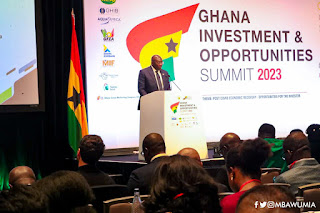
Ghana is back on track with investment opportunities - Veep woos foreign investors
Accra, June 6, GNA-Vice President Mahamudu Bawumia says Ghana's economic opportunities for private sector investors are back on track as...
-
 John E.A Mills died today at a Military Hospital in Ghana. He was 68. He became Ghana's President in 2009 after winning a general ...
 -
 A number of African Heads of State have started arriving in Accra to attend the second conference of the "Partnership with Africa...
 -
 The National Media Commission (NMC) has reconstituted the Board of Directors for State-Owned Media organisations in consultation with Presi...