12.11.06

KNUST to introduce entrepreneurial training

Authorities of Kwame Nkrumah University of Science and Technology (KNUST) are introducing entrepreneurship training into the curriculum to enable students have the capacity to set up their own businesses after graduation. Professor Kwasi Kwafo Adarkwa, Vice Chancellor of KNUST announced this at the Fourth Annual National KNUST Alumni Congress at Akuse on Saturday. He said the training would enable the students be fully equipped with entrepreneurial skills, thinking and capability to be on their own. The congress was under the theme ?Enhancing Private Sector Development in Ghana-Role of the Technocrat.?

According to Professor Adarkwa the training would offer them the opportunity to venture into various areas of economic and social interest quickly as desired.

?It would be heart-warming to see the springing up of companies and institutions fully owned and manned by technocrats, either as individuals or as a group,? he added.

Professor Adarkwa said graduates of KNUST had active role to play in enhancing private sector development in the country through the establishment of consultancy firms to offer technical advice on better ways of starting and managing one?s own business.

This, he said would help in the sharing of best practices in technical ideas, skills and experiences to improve on their fortunes and in addition, contribute to the socio-economic growth of the country.

Prof. Adarkwa appealed to the alumni to take up part-time teaching appointments as visiting lecturers over shorts periods of time in the university to augment their efforts considering the few lecturers as against the increasing student population.

Prof. Adarkwa said such an assistance from the alumni would afford them the opportunity to impart their technical know-how to students to enable them have the right and modern attitudes and personality traits required in their professional practice. ?In this way, we would be sure that students we train at KNUST are fully equipped with modern-day skills for their prospective jobs,? he added. Prof. Adarkwa noted that technology had assumed topical dimensions in every discourse about national development that required developing the human resource base with training of the needed manpower resource.

?In this regard, there would be no room for half-baked professionals, but those with the capability as far as their chosen professions are concerned,? he said.

The Vice Chancellor called on the alumni to link the university to foundations and corporate bodies that could enter into partnership to invest in some aspects of its development.

He commended the alumni for investing in a hostel project because the increase in student population did not correspond to the limited resources and infrastructure available.

Prof. Adarkwa said this led to the policy of ?in-out-out-out? where students had their own accommodation outside the campus.

Madam Adelaide Ahwireng, Chief Executive Officer of Fio Enterprise and adjudged Alumni Personality of the Year urged members to venture into private business but added that it required determination, integrity, honesty and embarking on a small beginning and developing it.

She called on students to improve on their skills and English Language, the basic requirements for employment in the private sector.

Prof. Seth Opuni Asiamah, Provost of College of Planning and Architecture, KNUST and National President of the alumni said branches had been established both locally and internationally to solicit for resources to support the university. Mr Paul Victor Obeng, Former Presidential Advisor in the PNDC regime and an alumnus, stressed the need to adopt aggressive programmes to solicit for funds to assist the university.Source:
GNA

Let us endeavour to make freedom in the constitution viable - Aliu

Vice President Aliu Mahama on Saturday said freedom provided in the constitution could only be viable when Ghanaians realized their limitations.

He said 93At the heart of democratic choice is self-restraint and voluntary compliance. Beyond that is institutional restraint." Alhaji Mahama made the observation at a grand durbar to climax activities marking the 60th anniversary celebration of Saint Monica's Secondary School at Asante Mampong in the Ashanti Region. The theme for the celebration was "60 years of Quality Girl-Child Education." He commended members of National Association of Graduate Teachers (NAGRAT) for returning to the classroom and urged them to exhibit good faith in the pursuit of peaceful and speedy resolution of differences. On the theme of the celebration, Alhaji Mahama said the task of nation building required collective effort and stressed the need for girl-child education to facilitate Ghana's forward march towards attainment of the Millennium Development Goals (MDGs) aimed at addressing pertinent development challenges of Ghana by 2015. Alhaji Mahama said "The task of nation building is gender neutral. The art of nation building requires the collective effort of both men and women in bringing about the good things in life that we desire for ourselves."

"Education is not only about infrastructure, it has more to do with the training within the building. There is the need for self-discipline and its application."

Alhaji Mahama asked students to desist from acts of indiscipline such as lack of respect for authority and vandalism. Mrs Dorothy Ama Mensah Ofei, Headmistress said the school which started with 16 girls now had 1,400 students.

She commended the school's PTA for providing five semi-detached bungalows, a 33-seater bus, electricity generator, fully equipped computer laboratory and a fence wall to keep off encroachers. Mrs Ofei announced that a four billion cedi education fund had been established to expand infrastructure on campus.

Miss Sandra Owusu, Girls Prefect appealed to stakeholders in education to provide the school with a well-stocked library, a large sick bay, a nurse to man the dispensary and separate halls for dinning and church service. Alhaji Mahama donated 20 million cedis as seed money for the fund.Source:
GNA

Ghana Supports Condemnation of Gaza Strikes

Ghana voted in favor of a U.N. Security Council draft resolution Saturday that sought to condemn an Israeli military offensive in the Gaza Strip and demand Israeli troops pull out of the territory. The resolution failed to pass because the United States vetoed it.
In the vote, four countries abstained — Britain, Denmark, Japan and Slovakia — and Ghana and 9 others - Argentina, China, Congo, France, Ghana, Greece, Peru, Russia, Qatar and Tanzania - were in favor.

The resolution, introduced by Qatar, the Arab representative on the council, had been amended during two days of negotiations to meet objections that it was not balanced. But U.S. Ambassador John Bolton said that it remained "in many places biased against Israel and politically motivated."

"This resolution does not display an evenhanded characterization of the recent events in Gaza, nor does it advance the cause of Israeli-Palestinian peace to which we aspire and for which we are working assiduously," he told the Security Council.

Jean-Marc de la Sabliere, the ambassador of France, said he felt that the final negotiated text was "a balanced one" and would have sent the right message to both Israel and the Palestinians.

The veto unleashed a flurry of criticism in the Middle East. The Arab League has criticised the United States for blocking a resolution.

Almost all of the 45 nations that spoke during a daylong debate on the Middle East on Thursday condemned Israel. Arab nations are now expected to move for a vote in the 192-member General Assembly, a path that they have followed in the past when such actions have failed to pass the Security Council.

Unlike Security Council resolutions, those passed in the General Assembly are nonbinding and largely symbolic. But they generally attract widespread support when Israel and, by extension, the United States are the targets.

It was the second U.S. veto this year of a resolution about Israeli operations in Gaza. The U.S. blocked action on a resolution this summer after Israel launched its offensive in response to the capture of an Israeli soldier by Palestinian militants. The U.S. is one of five permanent members of the council that have the power to veto resolutions.

Palestinians strengthened calls for Security Council action after an Israeli artillery barrage in the northern Gaza town of Beit Hanoun killed 19 people Wednesday.

Israel has expressed regret for the loss of life in Beit Hanoun but said it will continue operations to stop militants from launching rockets into Israel.


Source:
GHP

11.11.06

Some NAGRAT members decide to work ...

Some members of National Association of Graduate Teachers (NAGRAT) in Sekondi-Takoradi Metropolis have decided to work extra hours and during weekends to make up for lost periods during their two-month strike action.

Others maintained that their resumption was in obeisance to the court order and would teach "according to their conscience". This came to light when Ghana News Agency (GNA) visited some schools on Friday after striking NAGRAT members resumed work in accordance with the court order and persuasion from its leadership.

The visit was to find out from the students and teachers, effects of the strike and strategies being adopted to minimize its effects, particularly on final year students.

In some of the schools, few NAGRAT members were seen teaching while in others, most of them were seen in the Staff Common Room discussing the strike, blockade of their October salaries and the next line of action should their salaries remained blocked for some time.

Madam Aba Smith, Headmistress of Bompeh Secondary Technical School told the GNA that after discussions NAGRAT members in the school had decided to work extra hours and during weekends without any extra cost to parents.

Mr Kofi Adolf Osei, Headmaster of Takoradi Secondary School (TADISCO) said the school had to depend on National Service Personnel to prepare the students, particularly those in form three for their final examinations.

The situation was the same at Ahantaman Secondary School and Saint John's Secondary School at Sekondi where National Service Personnel ensured that academic work continued. At Ghana Secondary Technical School (GSTS) in Takoradi, Mr Thomas Kofi Mensah Headmaster said most NAGRAT staff members had returned to the classroom.

Mr John Ennor, Assistant Headmaster of Fijai Secondary School expressed concern about the inability of the school's Parent-Teacher Association (PTA) to collaborate with the school authorities to formulate plans that would minimize the effects of the strike action on students.

Mr Fiifi Buckman, TADISCO Local NAGRAT President said some NAGRAT members who had not reported for work might have travelled to their hometowns and were expected to return during the weekend for serious academic work to begin on Monday.

Some parents who spoke to GNA said it was a welcome decision to help final year students expected to take their examination next year.

Source:
GNA

VAT Service bites more defaulters

Value Added Tax (VAT) Service has closed down the offices of TredEnvitech company, dealers in environmental and sanitation materials at Wassa Nsuta near Tarkwa for non-payment of Value Added Tax (VAT) returns.


The VAT Service on Friday embarked on distressed action on some registered traders owing the service at Tarkwa and its environs.
Six companies owe the Service about four point nine billion cedis, five of them instantly mobilized funds to settle their debts leaving TredEnvitech.


At the premises of Banlaw Africa Limited, a sub-contracting mining firm, Mr Ian Kotze, Financial Controller of the company, had a confrontation with VAT officials.
The management of Gold Fields Ghana Limited, Tarkwa Mine, paid three point six billion cedis (3.6 billion cedis) being arrears from 2003 to 2005 to prevent VAT officials from sealing off the offices of Banlaw.


Speaking to newsmen, Mr Samuel Ackah Blay, Wassa West District Principal Revenue Officer said the action was necessitated after several attempts to retrieve the money had failed.


Mr Ackah Blay expressed satisfaction about the outcome of the exercise because about 90 per cent of the amount was retrieved from the companies and traders.
He asked traders who owed the Service to honour their tax liabilities before another exercise in December.
GNA

Ghana on the success path to take development

The Minister of Public Sector Reforms, Dr. Paa Kwesi Nduom, on Saturday said Ghana was being ranked among the first five countries in Africa that were well positioned to break out of extreme poverty among its people.

He said, “after suffering through the lost decades of the 1970s and the 1980s our country Ghana is finding its feet once again and is heading towards greater prosperity”.

According to him, Ghanaian professionals were also well regarded throughout the world, on university campuses, international organization and Major Corporation.


Dr. Nduom said this at the second and final session of the 37th congregation of the University of Cape Coast (UCC) at Cape Coast, during which 3,028 students, including 1,082 females were presented with degrees, diploma and certificates
The graduands were students from the Faculty of Continuing Education, Faculty of Art and the School of Agriculture.


Twenty-two students including, Mr Nii Ansah Tachie the over all best graduating students received special honours.

Dr Nduom tasked the graduands to use what they have learnt in their various course of study to make Ghana different from the “non-performing” countries in the world and also ensure that it took its people out of extreme poverty.


He also urged them to believe in themselves, be patriotic citizens, live disciplined lives and encourage success, adding that Ghana have “successful, confident and prosperous people”.


The Vice Chancellor, Reverend Professor Emmanuel Adow Obeng, announced that the UCC has sourced a loan of 6.3 million dollars from the Chinese government to set up permanent study centres with internets and teleconferencing facilities in all the regions to enhance its distance learning education programme, which has 20,000 students.
He said the school of Modern Languages, School of Heritage and Liberal Arts and School
of Creative Arts would be created next academic year in the Faculty of Arts.
He said the School of Agriculture was also introducing a two-year post diploma programme in animal health, to assist the government to
achieve its aim of meeting the country’s increasing demand for animal protein.


Dr. Charles Mensa, Chairman of the University Council, in his welcoming address, expressed concern about the upheavals and unrest at the pre-tertiary level of education and called on all the parties to move from their entrenched positions in the true spirit of “give and take” to ensure that a solution which is satisfactory to all is reached.

He advised the graduands to bring honour to themselves, their parents and their alma mater and also endeavour to give back to society by way of selfless service, the huge investment that were made to ensure that their education was possible.
GNA

Human Dev't Report: Poor Pay More For Water in Ghana

In Accra, Ghana, [water] connection rates average 90% in high-income areas and 16% in low-income settlements. People in Adenta and Madina, sprawling slum areas in the southeast part of the city, buy their water from intermediaries served by tanker truck associations, which in turn purchase in bulk from the water utility. The upshot: many of the 800,000 people living at or below the poverty line in Accra pay 10 times more for their water than residents in highincome areas. To add insult to injury, the volume of water available for users in slums is often reduced because of overconsumption by households in high-income areas.
Water provided to slums in cities such as Accra is reduced during periods of shortage to maintain flows to high-income areas, where provision amounts to more than 1,000 cubic litres per person a day.

Ghana will need to increase the rate at which coverage is increasing for water and sanitation by a factor of 9.

In 2004 Ghana and Tunisia both received $88 in aid for every person without access to an improved water source; Burkina Faso and Mozambique received $2 per person. South Africa received $11; Chad and Nigeria received between $3 and $4. Aid pessimists question the role of development assistance in fostering human development. That pessimism is unfounded. International development assistance has been pivotal in supporting progress in access to water in countries such as Ghana, South Africa and Uganda—and it continues to support progress towards sanitation for all in Bangladesh and Lesotho.

In the Ghanaian capital, Accra, and in Guayaquil, Ecuador, large water tanker fleets set off every morning for low-income settlements, where they sell to households and intermediaries.

Ghana adopted a new water law in 2005 that commits the government to expand the role of private operators in delivering services through management contracts. As part of the policy reform, a private operator was selected in late 2005 for a five-year management contract covering Accra and other major towns. Because of a combination of underfinancing, inefficiency and inequitable pricing the publicly owned utility, the Ghana Water Company, had been failing to provide water to urban areas throughout the country, and management contracts are now seen as part of the solution. Will the new arrangement deliver? Some of the targets set are encouraging. For Accra they include establishing 50,000 new household connections and restoring regular water supply to existing customers. The programme also envisages the creation of 350 public standpipes a year for unserved urban areas.33 Outcomes will depend on the clarity of contracts and on regulation. One concern is the inadequacy of financing and delivery strategies for reaching the poorest households. Moreover, details about pricing for standpipes and the targeting of poor areas remain vague.

The decentralization of rural water supply in Ghana is a demand-responsive approach that is working
Ghana’s rural water supply—a participative approach that works
In little more than a decade Ghana transformed the structure for rural water supply, expanding coverage through more participative— and more efficient—delivery systems. The change has been dramatic. At the start of the 1990s rural water supply was managed through the Ghana Water and Sewerage Corporation, a public utility responsible for planning, building and maintaining rural water supplies. Boreholes drilled in Ghana were among the most costly in the world, and as few as 40% of handpumps were working at any one time because of poor maintenance. Access to water is now being extended to about 200,000 more people each year. Coverage has increased from 55% in 1990 to 75% in 2004, with rural areas figuring prominently. Ghana achieved this progress through sweeping reform of a system that was topdown, unresponsive and not delivering. Responsibility for rural water supplies was transferred to local governments and rural communities. Authority for coordinating and facilitating the national strategy for community-managed water and sanitation was transferred to the Community Water and Sanitation Agency—a highly decentralized body with multidisciplinary staff in 10 regions of the country. The regional teams provide direct support to district assemblies in planning and managing safe water and sanitation services.
New political structures for water governance have been developed as part of a broader decentralization programme. District assemblies, an important tier of elected local government, are responsible for processing and prioritizing community applications for water supplies, awarding contracts for hand-dug wells and latrine construction and running a latrine subsidy programme. They also provide 5% of the capital costs of water facilities. Village structures are part of the new system. To apply for capital grants, communities have to form village water committees and draw up plans detailing how they will manage their systems, contribute the cash equivalent of 5% of the capital costs and meet maintenance costs. An assessment in 2000 identified major improvements:

More than 90% of people were satisfied with the location, quantity and quality of the water.
The overwhelming majority of people had contributed to the capital costs, with 85% also paying towards operation and maintenance costs. Most believed that the principle of payment was fair and intended to continue paying
More than 90% of water and sanitation committees had received training, opened bank accounts and held regular meetings. Women played active and influential roles on these committees.
Another problem is the fragmentation of authority. In Ghana roles and responsibilities for water are well defined within a national planning framework. That is not the case for sanitation, where authority is divided among the Ministry for Water Resources, Works and Housing and a range of other line ministries.

In Ghana farmers around Kumasi use wastewater on 12,000 hectares, more than twice the area covered by formal irrigation systems across the whole country. It is estimated that dry season irrigation with wastewater raises average agricultural incomes in Kumasi by 40%–50%, with the predictability of supply and the high nutrient content of the wastewater enabling farmers to enter higher value-added vegetable markets.

Countries such as Ghana and Zambia have very high levels of water storage per capita—higher, in fact, than the United States—but a limited capacity to mitigate risk.
Life expectancy
Over the past three decades developing countries as a group have been converging on developed countries in life expectancy. Their average life expectancy at birth has increased by nine years, compared with seven in high-income countries. The exception again is Sub- Saharan Africa. For the region as a whole life expectancy today is lower than it was three decades ago—and even this headline story understates the problem.
Current evidence does not point to systematic bias in [HIV/AIDS] treatment. In Ethiopia and Ghana women account for a smaller share of treatment than predicted on the basis of infection rates, but in South Africa and Tanzania they account for a larger share.

Full report


Source:
GHP

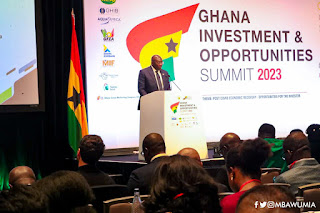
Ghana is back on track with investment opportunities - Veep woos foreign investors

Accra, June 6, GNA-Vice President Mahamudu Bawumia says Ghana's economic opportunities for private sector investors are back on track as...