Value Added Tax (VAT) Service has closed down the offices of TredEnvitech company, dealers in environmental and sanitation materials at Wassa Nsuta near Tarkwa for non-payment of Value Added Tax (VAT) returns.
The VAT Service on Friday embarked on distressed action on some registered traders owing the service at Tarkwa and its environs.
Six companies owe the Service about four point nine billion cedis, five of them instantly mobilized funds to settle their debts leaving TredEnvitech.
At the premises of Banlaw Africa Limited, a sub-contracting mining firm, Mr Ian Kotze, Financial Controller of the company, had a confrontation with VAT officials.
The management of Gold Fields Ghana Limited, Tarkwa Mine, paid three point six billion cedis (3.6 billion cedis) being arrears from 2003 to 2005 to prevent VAT officials from sealing off the offices of Banlaw.
Speaking to newsmen, Mr Samuel Ackah Blay, Wassa West District Principal Revenue Officer said the action was necessitated after several attempts to retrieve the money had failed.
Mr Ackah Blay expressed satisfaction about the outcome of the exercise because about 90 per cent of the amount was retrieved from the companies and traders.
He asked traders who owed the Service to honour their tax liabilities before another exercise in December.
GNA

News from Ghana,the African Sub-Region and More!
11.11.06

Ghana on the success path to take development
The Minister of Public Sector Reforms, Dr. Paa Kwesi Nduom, on Saturday said Ghana was being ranked among the first five countries in Africa that were well positioned to break out of extreme poverty among its people.
He said, “after suffering through the lost decades of the 1970s and the 1980s our country Ghana is finding its feet once again and is heading towards greater prosperity”.
According to him, Ghanaian professionals were also well regarded throughout the world, on university campuses, international organization and Major Corporation.
Dr. Nduom said this at the second and final session of the 37th congregation of the University of Cape Coast (UCC) at Cape Coast, during which 3,028 students, including 1,082 females were presented with degrees, diploma and certificates
The graduands were students from the Faculty of Continuing Education, Faculty of Art and the School of Agriculture.
Twenty-two students including, Mr Nii Ansah Tachie the over all best graduating students received special honours.
Dr Nduom tasked the graduands to use what they have learnt in their various course of study to make Ghana different from the “non-performing” countries in the world and also ensure that it took its people out of extreme poverty.
He also urged them to believe in themselves, be patriotic citizens, live disciplined lives and encourage success, adding that Ghana have “successful, confident and prosperous people”.
The Vice Chancellor, Reverend Professor Emmanuel Adow Obeng, announced that the UCC has sourced a loan of 6.3 million dollars from the Chinese government to set up permanent study centres with internets and teleconferencing facilities in all the regions to enhance its distance learning education programme, which has 20,000 students.
He said the school of Modern Languages, School of Heritage and Liberal Arts and School
of Creative Arts would be created next academic year in the Faculty of Arts.
He said the School of Agriculture was also introducing a two-year post diploma programme in animal health, to assist the government to
achieve its aim of meeting the country’s increasing demand for animal protein.
Dr. Charles Mensa, Chairman of the University Council, in his welcoming address, expressed concern about the upheavals and unrest at the pre-tertiary level of education and called on all the parties to move from their entrenched positions in the true spirit of “give and take” to ensure that a solution which is satisfactory to all is reached.
He advised the graduands to bring honour to themselves, their parents and their alma mater and also endeavour to give back to society by way of selfless service, the huge investment that were made to ensure that their education was possible.
GNA
He said, “after suffering through the lost decades of the 1970s and the 1980s our country Ghana is finding its feet once again and is heading towards greater prosperity”.
According to him, Ghanaian professionals were also well regarded throughout the world, on university campuses, international organization and Major Corporation.
Dr. Nduom said this at the second and final session of the 37th congregation of the University of Cape Coast (UCC) at Cape Coast, during which 3,028 students, including 1,082 females were presented with degrees, diploma and certificates
The graduands were students from the Faculty of Continuing Education, Faculty of Art and the School of Agriculture.
Twenty-two students including, Mr Nii Ansah Tachie the over all best graduating students received special honours.
Dr Nduom tasked the graduands to use what they have learnt in their various course of study to make Ghana different from the “non-performing” countries in the world and also ensure that it took its people out of extreme poverty.
He also urged them to believe in themselves, be patriotic citizens, live disciplined lives and encourage success, adding that Ghana have “successful, confident and prosperous people”.
The Vice Chancellor, Reverend Professor Emmanuel Adow Obeng, announced that the UCC has sourced a loan of 6.3 million dollars from the Chinese government to set up permanent study centres with internets and teleconferencing facilities in all the regions to enhance its distance learning education programme, which has 20,000 students.
He said the school of Modern Languages, School of Heritage and Liberal Arts and School
of Creative Arts would be created next academic year in the Faculty of Arts.
He said the School of Agriculture was also introducing a two-year post diploma programme in animal health, to assist the government to
achieve its aim of meeting the country’s increasing demand for animal protein.
Dr. Charles Mensa, Chairman of the University Council, in his welcoming address, expressed concern about the upheavals and unrest at the pre-tertiary level of education and called on all the parties to move from their entrenched positions in the true spirit of “give and take” to ensure that a solution which is satisfactory to all is reached.
He advised the graduands to bring honour to themselves, their parents and their alma mater and also endeavour to give back to society by way of selfless service, the huge investment that were made to ensure that their education was possible.
GNA
Human Dev't Report: Poor Pay More For Water in Ghana
 In Accra, Ghana, [water] connection rates average 90% in high-income areas and 16% in low-income settlements. People in Adenta and Madina, sprawling slum areas in the southeast part of the city, buy their water from intermediaries served by tanker truck associations, which in turn purchase in bulk from the water utility. The upshot: many of the 800,000 people living at or below the poverty line in Accra pay 10 times more for their water than residents in highincome areas. To add insult to injury, the volume of water available for users in slums is often reduced because of overconsumption by households in high-income areas.
 Water provided to slums in cities such as Accra is reduced during periods of shortage to maintain flows to high-income areas, where provision amounts to more than 1,000 cubic litres per person a day.
Ghana will need to increase the rate at which coverage is increasing for water and sanitation by a factor of 9.
In 2004 Ghana and Tunisia both received $88 in aid for every person without access to an improved water source; Burkina Faso and Mozambique received $2 per person. South Africa received $11; Chad and Nigeria received between $3 and $4. Aid pessimists question the role of development assistance in fostering human development. That pessimism is unfounded. International development assistance has been pivotal in supporting progress in access to water in countries such as Ghana, South Africa and Uganda—and it continues to support progress towards sanitation for all in Bangladesh and Lesotho.
In the Ghanaian capital, Accra, and in Guayaquil, Ecuador, large water tanker fleets set off every morning for low-income settlements, where they sell to households and intermediaries.
Ghana adopted a new water law in 2005 that commits the government to expand the role of private operators in delivering services through management contracts. As part of the policy reform, a private operator was selected in late 2005 for a five-year management contract covering Accra and other major towns. Because of a combination of underfinancing, inefficiency and inequitable pricing the publicly owned utility, the Ghana Water Company, had been failing to provide water to urban areas throughout the country, and management contracts are now seen as part of the solution. Will the new arrangement deliver? Some of the targets set are encouraging. For Accra they include establishing 50,000 new household connections and restoring regular water supply to existing customers. The programme also envisages the creation of 350 public standpipes a year for unserved urban areas.33 Outcomes will depend on the clarity of contracts and on regulation. One concern is the inadequacy of financing and delivery strategies for reaching the poorest households. Moreover, details about pricing for standpipes and the targeting of poor areas remain vague.
The decentralization of rural water supply in Ghana is a demand-responsive approach that is working
Ghana’s rural water supply—a participative approach that works
In little more than a decade Ghana transformed the structure for rural water supply, expanding coverage through more participative— and more efficient—delivery systems. The change has been dramatic. At the start of the 1990s rural water supply was managed through the Ghana Water and Sewerage Corporation, a public utility responsible for planning, building and maintaining rural water supplies. Boreholes drilled in Ghana were among the most costly in the world, and as few as 40% of handpumps were working at any one time because of poor maintenance. Access to water is now being extended to about 200,000 more people each year. Coverage has increased from 55% in 1990 to 75% in 2004, with rural areas figuring prominently. Ghana achieved this progress through sweeping reform of a system that was topdown, unresponsive and not delivering. Responsibility for rural water supplies was transferred to local governments and rural communities. Authority for coordinating and facilitating the national strategy for community-managed water and sanitation was transferred to the Community Water and Sanitation Agency—a highly decentralized body with multidisciplinary staff in 10 regions of the country. The regional teams provide direct support to district assemblies in planning and managing safe water and sanitation services.
New political structures for water governance have been developed as part of a broader decentralization programme. District assemblies, an important tier of elected local government, are responsible for processing and prioritizing community applications for water supplies, awarding contracts for hand-dug wells and latrine construction and running a latrine subsidy programme. They also provide 5% of the capital costs of water facilities. Village structures are part of the new system. To apply for capital grants, communities have to form village water committees and draw up plans detailing how they will manage their systems, contribute the cash equivalent of 5% of the capital costs and meet maintenance costs. An assessment in 2000 identified major improvements:
More than 90% of people were satisfied with the location, quantity and quality of the water.
The overwhelming majority of people had contributed to the capital costs, with 85% also paying towards operation and maintenance costs. Most believed that the principle of payment was fair and intended to continue paying
More than 90% of water and sanitation committees had received training, opened bank accounts and held regular meetings. Women played active and influential roles on these committees.
Another problem is the fragmentation of authority. In Ghana roles and responsibilities for water are well defined within a national planning framework. That is not the case for sanitation, where authority is divided among the Ministry for Water Resources, Works and Housing and a range of other line ministries.
In Ghana farmers around Kumasi use wastewater on 12,000 hectares, more than twice the area covered by formal irrigation systems across the whole country. It is estimated that dry season irrigation with wastewater raises average agricultural incomes in Kumasi by 40%–50%, with the predictability of supply and the high nutrient content of the wastewater enabling farmers to enter higher value-added vegetable markets.
Countries such as Ghana and Zambia have very high levels of water storage per capita—higher, in fact, than the United States—but a limited capacity to mitigate risk.
Life expectancy
Over the past three decades developing countries as a group have been converging on developed countries in life expectancy. Their average life expectancy at birth has increased by nine years, compared with seven in high-income countries. The exception again is Sub- Saharan Africa. For the region as a whole life expectancy today is lower than it was three decades ago—and even this headline story understates the problem.
Current evidence does not point to systematic bias in [HIV/AIDS] treatment. In Ethiopia and Ghana women account for a smaller share of treatment than predicted on the basis of infection rates, but in South Africa and Tanzania they account for a larger share.
Full report
Source:
GHP
10.11.06
Chiefs urged to collaborate with the Chamber of Mines
 Miss Joyce Aryee, Chief Executive Officer of the Ghana Chamber of Mines, has appealed to members of the National House of Chiefs to collaborate with the Chamber to use mining to promote rapid socio-economic development of the country.
She said the Chamber had embarked on advocacy programmes to ensure that mining benefited Ghanaians, especially those living in host communities and appealed to chiefs to support the Chamber to achieve that objective.
Miss Aryee made the appeal at a meeting with members of the National House of Chiefs in Kumasi on Friday.
She mentioned some of the advocacy programmes as getting the Government to increase royalties paid to host communities and the provision of specific infrastructure and industries in mining communities.
There should also be a deliberate attempt by the Government to attract investment in secondary industries to mining communities and to revive traditional gold refining and produce jewelleries as a way of generating employment.
Miss Aryee said the Chamber was embarking on a training programme for local goldsmiths in the country to improve upon their output.
She said the Chamber was also advocating increased and appropriate compensation for crops destroyed during mining activities and a model housing scheme and real estate designs for resettled communities.
Miss Aryee said all these should be incorporated in the mining lease packages before concessions were granted.
She explained that, the Chamber believed that, if mining were used properly it could make a difference in the country’s development.
She appealed to chiefs in mining communities not to promote illegal mining activities since they destroyed the environment.
Miss Aryee expressed concern about the degeneration of the moral values and norms in the country and appealed to members of the House to use their influence to help to curb the situation.
She appealed to them to declare 2007 the year of moral rejuvenation to help to revive good morals in the Ghanaian society.
GNA
NDC Parliamentarians congratulate Democrats

The National Democratic Congress, (NDC) on Friday pledged to work with
the Democratic Party in the US to achieve international peace and security by using all legitimate and diplomatic means to resolve conflict around the world
In a message to congratulate the party on winning the US mid-term elections, the NDC Parliamentary caucus said, “it will continue to support the call by peace loving countries to withdraw the US troops in Iraq and the victory of the Democratic Party will serve as a catalyst towards the cessation of heinous crimes against humanity in Iraq.”
The US, in their mid term elections last Wednesday took over the Republican controlled Senate and Congress by winning 51 seats in the Senate and gaining total control of Congress.
The message, sent on behalf of the NDC by
the Minority group in Parliament and signed by
its leader, Mr. Alban Bagbin, stated that during the campaign, the Democrats expressed their strong opposition to the war in Iraq and championed the cause of peace.
“In simple terms they said fear must diminish, hope must reign, war must end, peace must take centre stage. Sensation must cease, reconciliation must commence, Rambo-style politics must end, and Kofi Annan style diplomacy must prevail,” the statement noted.
The NDC pledged its support and co-operation for the further enhancement of the good relations existing between the two parties and the two countries.
“We trust that the Democratic Party will look at Ghana and in particular the NDC and support our efforts as we seek and speak of ways of enhancing our democratic culture and our social democratic values,” the statement added.
GNA
French Government pumps money into film development
 The effort of the Government to resource educational institutions to enhance the building up of active human resource base for the economic take-off had received massive boost with injection of capital by French Government into the film development.
The French Government, through its local embassy in Accra, had over the last year supported the National Film and Television Institute (NAFTI) with funds and equipment to resuscitate and upgrade the institute to compete favourably with other film and television training centres.
France has been organising a series of workshops, including film critique symposium for NAFTI students, financed the establishment of film dubbing studio, provided editing equipment and cameras, supported the celebration of animation festivals and gave sponsorship to students to attend other seminars across the continent.
Mr Martin Loh, NAFTI Director stated at the seventh Matriculation ceremony of 30 students of the Institute in Accra.
The Director commended the French Government's effort to promote the development of film and television development in Africa and challenged staff and students of the institute to reciprocate the gesture through improved production on Ghanaian screens.
He however, expressed disquiet about the physical expansion of the institute's studio complex, which according to Mr Loh, had been hampered by non-availability of funds over the last 28 years.
He said; "the project which commenced 28 years ago stands out there sleeping, while we scramble for space for teaching, accommodating staff and other academic facilities...no work has been done on it since 1998.”
"Funds approved each year in the Institute's Ghana Government budget support have not been adequate enough to even pay for bringing the contractors back to the site to start work."
Mr Loh, therefore called on the GETFund board to assist in completing the complex as NAFTI has assume the citadel of African film and television development.
On the upgrading of the Institute from a diploma to a degree awarding Institution, the NAFTI Director commended authorities of the University of Ghana, who facilitated the process.
"It's been a long and difficult journey...from a diploma awarding institution to degree level, we are grateful to the University of Ghana for giving us the opportunity to take this great step and for continuing to assist us to build NAFTI into the most respected film school in the sub-saharan Africa and indeed, one of the respected schools in the world," he said.
He said the seventh matriculation for the degree programme confirms that the Institute had made steady progress with teaching at a higher level.
He said the Institute had embarked on collaborative programmes with other tertiary Institutions both foreign and local to enhance teaching and learning, improve upon the type, content and quality of examination questions that would best suit the specific needs of NAFTI.
He explained that film education at a higher level was quite new in Africa and it was therefore not easy to recruit qualified staff to back-up the ageing ones.
Professor Clifford Nii Boi Tagoe, Vice Chancellor
of the University of Ghana called on Africans to use
film and television to project the rich culture of
Africa to the world.
This would enable the continent to assert and gain
a respectable place at the world stage.
He explained that Africans ought to determine their own plans and organize their economies to fight for a respectable share of the world market.
He deplored the continuous dependence of African Governments on foreign donor countries for help, it makes Africans subservient to other people's interest stressing "in today's global village, nations must rise and assert themselves, determine their own goals, plan and organise their economies in order to fight for a respectable share of the world market.
"We cannot do this if we were to continue to wait for help from others outside our continent...I wish therefore to challenge you students as well as graduates of NAFTI to use film and television to restore self confidence in the African, and awaken the spirit of pride and sense of nationalism, especially in the youth, to enable Africa rise and take its deserved place in the global village."
Prof. Tagoe said Africa has rich culture and traditions and exceptional values, "let us exploit them to our advantage.”
The Vice Chancellor said African countries should depend on own creativity and entrepreneurship to create wealth and improve the quality of life of the people.
He also urged educational institutions not to concentrate only on improving teaching and learning but also to initiate plans, which would place their products in a meaningful employment after school.
Mrs. Wilhemina Asmoah, (note ED name is correct) Deputy Registrar, Scholarship Secretariat who chaired the ceremony tasked students and staff to enhance their career.
She said over the years the Government of Ghana, through the Scholarship Secretariat had trained students in various levels and fields, stressing one of the most important scholarships had been the training of lecturers from the various tertiary institutions for postgraduate programmes abroad.
Mrs Asmoah said the Ohio University and the GETFund Board had signed a memorandum of understanding to train Broadcasting professionals over a period.
She tasked the students to take advantage of the enormous challenges and opportunities at the Institute to ensure that they graduated fully prepared, sharpened and skilled to take up greater tasks in film production.
The Registrar of the University of Ghana, Mr Seth Kornu administered the matriculation oath.
GNA
Korle Bu "SURGICAL"suspends admission for next 48 hours

The Korle Bu Teaching Hospital on Friday announced that admission of patients to the Surgical Medical Emergency Unit has been suspended for the next 48 hours.
A statement signed by Mr Mustapha Salifu, Public Relations of the Hospital said the suspension was to enable the hospital to carry out repair works as well as address some operational challenges in the unit.
It said patients who required emergency medical services should call at other hospitals in the metropolis.
Subscribe to:
Comments (Atom)
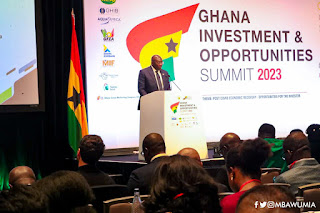
Ghana is back on track with investment opportunities - Veep woos foreign investors
Accra, June 6, GNA-Vice President Mahamudu Bawumia says Ghana's economic opportunities for private sector investors are back on track as...
-
 John E.A Mills died today at a Military Hospital in Ghana. He was 68. He became Ghana's President in 2009 after winning a general ...
 -
 A number of African Heads of State have started arriving in Accra to attend the second conference of the "Partnership with Africa...
 -
 The National Media Commission (NMC) has reconstituted the Board of Directors for State-Owned Media organisations in consultation with Presi...