6.11.06

Corruption perception rises in Ghana


The general perception among Ghanaians that the government has become ever more corrupt over the years received a stamp of scientific legitimacy Monday, as Transparency International (TI) released its 2006 Corruption Perceptions Index (CPI), which points to the correlation between corruption and poverty. TI is a non-government organization committed to fighting corruption.

Ghana ranked 70th out of 163 countries surveyed in the global CPI for this year, a five-step fall from last year when there were four countries less. ( read)

Ghana received a score of 3.3 out of 10 on the CPI scale, down 0.2 point from 2005, indicating that Ghanaian society is becoming corrupt slowly but surely.

Ghana's result, the worst in the past 10 years, is now at par with that in 1999, which was recorded when the Rawlings administration was in power.

"In fact this year's CPI score of 3.3 takes Ghana back to its lowest point since its inclusion in Transparency International's annual corruption rankings and indicates clearly that the nation has retrogressed in the anti-corruption battle," Mrs Linda Ofori-Kwafo, Programmes Manager GII, said at the launch of the Report.

CPI relates to perceptions of the degree of corruption as seen by business people and country analysts, and ranges from scores of 10, which is "highly clean," and 0, which is "highly corrupt."

'Corruption traps millions in poverty,' said TI chair Huguette Labelle, adding: 'Despite a decade of progress in establishing anti-corruption laws and regulations, today's results indicate that much remains to be done.'

All low-income countries and all but two African states score below five points, meaning they face serious perceived levels of domestic corruption.

Botswana is the cleanest ranked African state in 37th place on the list, with South Africa (51st place) and Namibia (55th place) in the upper third. Nigeria is among the worst-ranked states at place 142. Guinea was the worst placed Africa nation at 160

Finland, Iceland and New Zealand came first with 9.6 points, while Haiti came in last scoring 1.8 points, according to the report.

Britain was 11th with an 8.6 rating, Germany 16th at 8.0 and the United States 20th with 7.3. Italy mustered only a 4.9 rating in 45th place, while Russia was ranked 121 with 2.5.

Countries with a significant worsening of corruption include: Brazil, Cuba, Israel, Jordan, Laos, Seychelles, Trinidad and Tobago, Tunisia and the US, said the report.

Countries with a significant reduction in perceived levels of corruption include: Algeria, Czech Republic, India, Japan, Latvia, Lebanon, Mauritius, Paraguay, Slovenia, Turkey, Turkmenistan and Uruguay.

The Berlin-based Transparency International's CPI ranks countries in terms of the degree to which corruption is perceived to exist among public officials and politicians. It is a composite index, a poll of polls, drawing on corruption-related data from expert and business surveys carried out by a variety of independent and reputable institutions.

The value of the results is sometimes disputed because they are based on the opinions of the people polled and the amount of data used in surveys is different for each nation. TI requires at least three sources to include a country in the CPI.
Ghana's CPI 'progress report'

Year Rank/World Rank/Africa CPI Score
2006 70/163 4/44 3.3
2005 65/159 6/44 3.5
2004 65/146 3.6
2003 72/133 3.3
2002 3.9
2001 3.4
2000 3.5
1999 3.3

Source:
GHP

2007 is “foundation year” for 2008 vote – NPP


The ruling New Patriotic Party (NPP) on Sunday declared 2007 as the foundation year for Elections 2008 to enable the party plan and implement effective and efficient strategies to retain power.

“We are going to empower party activists, foot soldiers and the rank and file with strategic modern politicking for mobilization, re-organization and information to neutralize all opposing forces with sound in-depth debate,” Mr Michael Omari Wadei, Ayawaso West Wuogon Constituency Chairman of the party stated at a delegates’ conference in Accra.

The conference was attended by constituency and polling station executives as well as leading members of the party in the constituency.
Mr Omari Wadei said the party would soon outline modalities for the selection of a successor to President John Agyekum Kufuor.

He said the party’s candidate should be someone who would be acceptable to all Ghanaians and had the requisite political experience and connections to mobilise both local and international support for the development of the party and the country as a whole.

"The party does not necessarily need a rich person or an intellectual. The challenge is to elect a leader who will unite and become a bridge between the elite and the average citizens," he told the Ghana News Agency in an interview.

He stressed that what the party needed now was total support. “We must unite, stay focused especially before, during and after the election of a presidential candidate for Elections 2008. We must stand solidly behind the Elephant and the principles of the Danquah-Busia tradition.”

Mr Gorge Isaac Amoo, former Member of Parliament for Ayawaso West Wuogon, appealed to the party executives to come out with immediate operational directives to reduce the number of people who want to become the presidential candidate of the party.


He said Article 14 of the NPP's constitution stated, among other provisions that, the party could adopt rules to regulate its activities. Mr Amoo, whose presence at the delegates’ conference was greeted with laud applause, noted that this was the only way to ensure discipline and enhance efforts to unite all factions within the party to win the confidence of the electorate.


He also appealed to all presidential aspirants to co-operate with the elders of the party, through the national, regional, constituency and polling station executives and work to eliminate any form of divisions within the party.


Mr Amoo appealed to minority parties and social commentators for sobriety, objectivity and commitment in discussions concerning issues that impact on the country's politics and social welfare of the people.


"While multi-party politics necessarily involves conflicting views and opinions, it is important that even in seeking to win popularity, the fundamentals of the issues which affect the economic and social well-being of our people are still dispassionately and objectively debated and handled.”


Mr Amoo therefore challenged the minority to suggest alternatives rather than simply hastily throwing accusations at Ghana's current economic managers.


The Constituency Secretary, Mr John Gyasi commended polling station executives for their cooperation and support over the past year and urged them to continue to work for the retention of the seat in 2008 Elections.
GNA

Orthodox medicine is ineffective for treating diabetes - Dr Ofei-Agyemang

Dr. Kwesi Ofei-Agyemang, Proprietor of New Life Clinic, said on Monday a growing number of people were going for alternative medicine since orthodox medicine had proved ineffective in the management of diseases including diabetes.

Dr Ofei-Agyemang made the observation at a press conference in Accra to educate Ghanaians about the causes of diabetes and suggested alternative
methods for its management.

"If Ghanaians and the Ghanaian economy are to be saved from catastrophic health care costs, especially of adult onset diabetes, then it is time we
take a good look at the wisdom in and cost effectiveness of alternative medicine," he said.

Dr. Ofei-Agyemang said the treatment of chronic diseases currently accounted for 85 per cent of the national health care bill, explaining,
"We wait for illness to develop and spend huge sums on heroic
measures for treatment even ignoring the underlying lifestyle related causes."

He however, stated that orthodox medicine was only effective when dealing with medical emergencies, bacteria infections, trauma care and complex surgical techniques.

Dr Ofei-Agyemang said the fact that medical practitioners were falling victim to chronic diseases, especially with the onset diabetes was evidence that doctors were ignorant of the causes of the disease.

Diabetes is a result of accumulated saturated fat and high cholesterol, “hence the disease is due to the food we eat,” he said, and urged Ghanaians to eat a lot of fruits and vegetables to enable them stay healthy.
GNA

Lights on/off resumes in Accra today


The load shedding programme of the Volta River Authority (VRA) and Electricity Company of Ghana (ECG), which was suspended for five days in support of the National Immunization Days, resumes on Monday morning.
"We want to remind the public that the load shedding programme, which was suspended on November 1, resumes on Monday morning," Ms Abla Fiadjoe, Acting Corporate Affairs Manager of the VRA, told the Ghana News Agency on Sunday in Accra.

She said the National Immunization Days ended on Sunday, hence the resumption of the load shedding.

The government ordered VRA and ECG to suspend the load shedding from November 1-5 in support of the National Immunization Days. "In order to support the immunization programme this year and also to ensure that the health delivery targets of government are met, government has decided that the current load shedding programme should be suspended from November 1-5," the Ministry of Energy had said. The five-day National Immunisation exercise ended on Sunday with health officials expressing satisfaction with the turn out.

This year's exercise on the theme: "Integrated Child Health Campaign", was aimed at reducing under-five mortality rate by two-thirds by the year 2015.

The exercise, which combined measles and polio immunisation, administering of vitamin A and distribution of 2.1 million free Insecticide Treated Nets (ITNs) to children less than two years old was the first in the country to boost the survival rate of millions of children.

About 5.959 million children from 0 months to 59 months for polio and about 5.065 million children from nine months to 59 months for measles were targeted at a cost of about 162 billion cedis. There were 9,050 immunisation points, 9,505 vaccinators, and 28,514 volunteers to ensure that all the children were covered.

Dr Kwadwo Antwi-Agyei, Expanded Immunisation Programme Manager of the Ghana Health Service, told the GNA in an interview that he exercise was successful and commended all those who were involved for their had work and sacrifice.


Source:
GNA

5.11.06

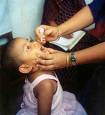
Five days Immunisation exercise ends


The five-day National Immunisation exercise ended on Sunday with health officials expressing satisfaction with the turn out.

This year's exercise under the theme "Integrated Child Health Campaign" aimed at reducing under-five mortality rate by two-thirds by the year 2015, started from November 1-5, 2006.

The exercise combined measles and polio immunisation, administering of vitamin A and distribution of 2.1 million free Insecticide Treated Nets (ITNs) to children less than two years old was the first in the country to boost the survival rate of millions of children. About 5.959 million children from 0 months to 59 months for polio and about 5.065 million children from nine months to 59 months for measles were targeted at a cost of about 162 billion cedis.

There were 9,050 immunisation points, 9,505 vaccinators, and 28,514 volunteers to ensure that all the children were covered.

Dr Kwadwo Antwi-Agyei, Expanded Immunisation Programme Manager of the Ghana Health Service, told the GNA in an interview that he exercise was successful and commended all those who were involved for their had work and sacrifice.

A visit by the GNA to some immunization points in some parts of Accra saw volunteers sitting idle with less work to do. At the Ashalley Botwe Newtown immunization point Ms Emefa Voudianyi, a volunteer, told the GNA that the first three days experienced high turn out "but the last two days have been less busy".

She said some mothers started queuing as early as 0400 hours on the first and second days to avoid being in long queues under the scorching sun.

"I believe the high turn out was because of the free distribution of ITNs that attracted more mothers. Even those who do not send their children for Child Welfare Clinic brought their children for immunization", Ms Voudianyi said.

The story was not different at the Adjirigano post near East Legon, OIC at Shiashie, La Trade Fair, OSU Kaagyano and Osu Alata. When the GNA got there volunteers were less busy with mothers trickling in. Few mothers the GNA spoke to expressed dissatisfaction that the ITNs were meant for just children from zero to two years.

"My daughter is two years three months and the net is expensive and I cannot afford it so I thought I would be given here but I wasn't", Naa Morkor of Osu Alata told the GNA.

Mrs Marian Narh of Ashalley Botwe was of the view that every child under five years who was immunised should have been given the net because "the mosquito when biting does not discriminate, and malaria we know is no respecter of persons." 05 Nov. 06Source:
GNA

Online dating scams from Ghana on the rise


The U.S. embassy in Accra, Ghana, reports receiving up to 15 calls a week from Americans who have lost money on relationship scams originating in Ghana....
Online dating scams on the rise in the U.S.
HAMPTON FALLS -- Scam artists are tapping into the online dating market, and in two cases in Hampton Falls, have stolen thousands of dollars from women who thought they had a romantic relationship.

The Hampton Falls Police Department is investigating two cases of online fraud.

The local women were duped out of thousands of dollars they'll likely never recover, Police Chief Robbie Dirsa said.

It could happen to anyone, said Dirsa, whose officer, Jeremy Tetreault, spoke at an identity theft seminar in Hampton this past Thursday.

Dirsa described both victims as professional women scammed by expert salesmen.

One case began in January 2002, he said, after one woman met a man online through the Yahoo Personals. She loaned him, over the course of more than a year, $109,000 for his alleged trucking business, Dirsa said.

The couple had a few dates, Dirsa said, though police are investigating whether the man she dated is the same person she met online or someone sent to get the money. The man she dated is described as a white male, in his 50s. She said he lived in-state.

Police know very little about him, even though they have a name and an e-mail address.

"We don't know whether he lives in New Hampshire or not," Dirsa said. "He has a name that is common."

He never repaid any amount of the loan, and the woman hasn't heard from him.

"Like they tell you, anybody can buy anything on the Internet," Dirsa said. "These cases are tough. People play into emotions."

Some people are embarrassed to come forward and admit they've been taken, Dirsa said. This may be particularly true of senior citizens who respond to e-mail requests for money.

"I wonder how many people lose a thousand, lose two thousand, and not report it," he said.

This spring, another female resident said she began e-mailing a man she met through an online dating service. She never met him in person. He told her he was an American citizen working in Nigeria. He began making requests for cash. She sent him at least $10,000, Dirsa said.

She then received a letter and a $7,500 check from a woman across the country who asked her to send the money to him. When she tried to wire the money, the company stopped her from sending it, Dirsa said.

Schemes out of Nigeria are notorious, he said, because the country will do nothing to cooperate with U.S. investigations of Internet fraud.

"This is money absolutely gone," he said.

Because he had no fear of being prosecuted, the man continued to ask the woman for money even after he knew she had gone to law enforcement.

The woman who sent the money cross-country got her $7,500 back, Dirsa said. She also believed she had a romantic e-mail relationship with the man.

"They know how to tap into someone's emotions," Dirsa said. Americans, he said, "want to help the underdog."

Dirsa brought the cases to the attention of the Federal Bureau of Investigation in Portsmouth. In the case of the first woman, he said, the man may have given her a false identity, which would help in prosecuting him criminally.

Internet scams are very prevalent, said Gail Marcinkiewicz, a Boston spokeswoman for the FBI. She had no statistics for online dating fraud.

"It also happens with off-line relationships," she said, "(The person says) let me invest your money.' So many people give away money they should be careful about."

Internet complaints are sent to the National White Collar Crime Center in Richmond, Va., which works with the FBI, Marcinkiewicz said. Victims are encouraged to make complaints to www.ifccfbi.gov.

Cases may not meet prosecution guidelines unless investigators see a pattern, Marcinkiewicz said.

The top 10 states for Internet fraud include no New England states. The list does include California, Texas, Florida and New York.

Christian Desilets, a resource attorney with the National White Collar Crime Center (NW3C), responded to an e-mail request for information.

To his knowledge, he said, the exact dimensions of Internet dating fraud have not been measured with any degree of certainty. There is, he said, a great deal of anecdotal evidence "that points to it being a widespread phenomenon."

Julie Ferguson, executive director of The Merchant Risk Council, according to Desilets, is reported to have noticed a marked upturn in the number of calls she receives on Internet dating fraud, from one call every three months to "one every couple of weeks or so."

Dating sites and chat rooms are one of the primary means by which suspects make contact with new victims, according to information given to Desilets by Supervisory Special Agent Dale Miskell.

Miskell is in charge of an FBI CyberCrime squad in Birmingham, Ala., and has worked extensively with Nigerian authorities to combat reshipping schemes. This is when online thieves purchase items with stolen credit cards and have them sent to an innocent party to be shipped out of the country.

Miskell also investigates check or money-order fraud, when the suspect sends the victim a fraudulent check or money order to cash and then has the innocent party wire him or her the money before the bank discovers the instrument was fraudulent.

The U.S. embassy in Accra, Ghana, reports receiving up to 15 calls a week from Americans who have lost money on relationship scams originating in Ghana, Desilets said. There are also official warnings from the State Department with regard to dating scams originating from the Ukraine.

To shed some light on the scope of the problem, several e-groups and Web communities exist for networking between victims, Desilets said. A prominent one is http://groups.yahoo.com/group/romancescams/.

"While a victim may certainly pursue civil routes to recovery (as the criminal system is less geared to restoring the victim's lost money than the civil system), there is no doubt that it is also a criminal matter," he said, subject to fine and imprisonment.

As a practical matter, criminal prosecution is difficult, particularly when the case involves an investigation overseas.

Source:
GHP

WHO reintroduce DDT for malaria control


The World Health Organisation (WHO) has reintroduce the use of DDT (Dichloro-Diphenyl-Trichcoroethane) for the
control of malaria saying it is most effective and safe.


The organization is therefore, presently promoting the use of Indoor Residual Spraying (IRS) with DDT for the control of the disease in epidemic areas as well as with constant and high malaria transmission.

Explaining the rationale for the reintroduction of DDT, which was banned about 30 years ago on Thursday in Obuasi Dr Joaquim Saweka, the WHO representative in Ghana said later extensive research had shown that well-managed IRS programme using DDT pose no harm to wildlife or humans.

He said the study revealed that DDT presents no health risk when used properly adding; "WHO has given its blessings to DDT and it is important for countries to issue a clear statement outlining their position on IRS with long-lasting insecticides;" IRS is the application of long-acting insecticides on the walls and roofs of houses and domestic shelters in order to kill malaria carrying mosquitoes that land on these surfaces.

Dr. Saweka stressed that using IRS with DDT required a clear specification of where and how the spraying should be implemented in accordance with WHO guidelines.
The programmatic evidence of the research according to him showed that correct and timely use of IRS can reduce malaria transmission by up to 90 per cent.


He said, WHO was prepared to provide a facilitating role in terms of guidance and capacity building to assist countries and/or organizations that would adopt this new approach of IRS to help reduce the high mortality rate and improve the lives of the populace.
GNA

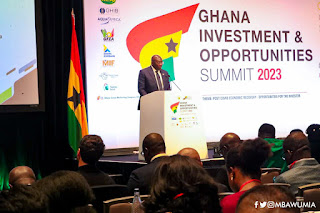
Ghana is back on track with investment opportunities - Veep woos foreign investors

Accra, June 6, GNA-Vice President Mahamudu Bawumia says Ghana's economic opportunities for private sector investors are back on track as...