An Accra Regional Tribunal chaired by Mr Justice Frank Manu on Thursday remanded into prison custody three suspects in connection with the 76 missing parcels of cocaine from MV Benjamin.
The tribunal refused to take the pleas of Joseph Kojo Dawson, a businessman, Freeman Sosi, a fisherman and canoe owner and Evans Charwetey Tsekobi, an auto mechanic.
They were charged with various counts of conspiracy to commit crime and abetment of crime contrary to Sections 556 and 10 of the Narcotic Drugs (Control, Enforcement and Sanctions) Law 1990, PNDC L236.
The facts of the case were not read. They will reappear on November 17.
Two other accomplices, Sheriff Asem Darkei, alias The Limping man, now at large and Alhaji Moro Mohammed, a businessman, who has been admitted to the Police Hospital under guard, were not in court.
Mrs Gertrude Aikins, Chief State Attorney, prayed the tribunal to remand the accused persons in custody because investigations were not completed.
She stated: "This morning I changed the charge sheet, because other developments came up.”
Mrs. Aikins contended that the prosecution had done a good job so far, saying: "Our country is in danger and we all have to contribute our quota to save the situation.”
Attorneys for Dawson, Sosi and Tsekobi asked the tribunal to set specific orders to determine when the facts of the case should be read. They said if the judge was gracious enough to look at the facts of the case, it would realise that the re-arraignment before the tribunal was completely bogus.
They explained that, in one breath the State proposed to charge the
accused persons with dealing in narcotic drugs, but this was cancelled and replaced with conspiracy to commit crime.
They averred that their defence in the case was being thwarted by the prosecution and pleaded with the court to give their clients bail even it
would be with stiff conditions.
The Attorneys argued that the third accused person, Sosi, was an illiterate fisherman who had three canoes called Milo - 1, 2 and 3.
In the course of his work, he was hired to transport goods for someone he would not be in a position to know, likewise the content of the goods.
They argued further that it was such an innocent person who had been charged with conspiracy and dealing in narcotic drugs, which could not be proved before the Tribunal.
The lawyers said the arrest of Tsekobi, a brother of Darkei, who is at large, was just a cover up and inefficiency of the Police. They added Tsekobi was a mechanic who returned from Togo to find that his room had been ransacked.
He went to the Police to make a report that thieves had broken into his room, only to be arrested.
GNA

News from Ghana,the African Sub-Region and More!
2.11.06

GT to switch to use of solar energy –Deputy CEO
In the face of current energy challenges, Ghana Telecom (GT) plans to use solar as the main source of power to drive the over 300 cell sites it operates in the country.
Currently, most of the sites are powered either by onventional power, batteries or commercial generators.
At a press briefing on alternative energy, Mr Dickson Oduro-Nyaning, GT's Deputy Chief Executive Officer, said the conversion process would save the company millions of dollars that it spent on fuel and equipment.
The forum was also used to draw public attention to an Inter-Faith Based ICT International conference scheduled for Accra between November 7 and 9 this year.
Mr. Oduro-Nyaning said already GT was using solar energy as the main source of power on the company's northern transmission repeater stations and cellular payphones.
Other areas where solar is used are the e-care centre, a collaboration between UN Foundation (UNF), UN Environmental Project (UNED), Telenor Management Partners, Kumasi Institute of Technology and Environment and GT to provide information technology to people in the rural areas.
It is in this direction that GT welcomes the establishment of Ghana Telecom University College Centre for the Study of Alternative Energy (CSAE) to offer both certificate and degree programmes in Alternative Energy.
The primary goal of the CSAE being done in collaboration with the University of California, Santa Barbara, is to educate and prepare the technical and scientific workforces for the emerging alternative energy technology.
"Considering the current energy challenges in Ghana, it becomes natural and vital that alternative energy sources be developed and utilised, especially in areas where there is no national grid," Mr Oduro-Nyaning said.
He said the proposed programme would contribute to the development of much needed human resource for the country's alternative energy training.
Professor Walter Kohn, Winner of the 1998 Nobel Prize in Chemistry, would help set up the centre.
Dr Osei Darkwa, Principal of GTUC, said the Inter-Faith Based ICT Conference is to provide the opportunity to religious organisations to act as catalysts in bridging the digital divide.
"Using the new information technologies they can connect their congregants and communities to the information they need for health and learning…. The religious institution can become a community telecentre, a node in a worldwide network of knowledge and information," he said.
GNA
Currently, most of the sites are powered either by onventional power, batteries or commercial generators.
At a press briefing on alternative energy, Mr Dickson Oduro-Nyaning, GT's Deputy Chief Executive Officer, said the conversion process would save the company millions of dollars that it spent on fuel and equipment.
The forum was also used to draw public attention to an Inter-Faith Based ICT International conference scheduled for Accra between November 7 and 9 this year.
Mr. Oduro-Nyaning said already GT was using solar energy as the main source of power on the company's northern transmission repeater stations and cellular payphones.
Other areas where solar is used are the e-care centre, a collaboration between UN Foundation (UNF), UN Environmental Project (UNED), Telenor Management Partners, Kumasi Institute of Technology and Environment and GT to provide information technology to people in the rural areas.
It is in this direction that GT welcomes the establishment of Ghana Telecom University College Centre for the Study of Alternative Energy (CSAE) to offer both certificate and degree programmes in Alternative Energy.
The primary goal of the CSAE being done in collaboration with the University of California, Santa Barbara, is to educate and prepare the technical and scientific workforces for the emerging alternative energy technology.
"Considering the current energy challenges in Ghana, it becomes natural and vital that alternative energy sources be developed and utilised, especially in areas where there is no national grid," Mr Oduro-Nyaning said.
He said the proposed programme would contribute to the development of much needed human resource for the country's alternative energy training.
Professor Walter Kohn, Winner of the 1998 Nobel Prize in Chemistry, would help set up the centre.
Dr Osei Darkwa, Principal of GTUC, said the Inter-Faith Based ICT Conference is to provide the opportunity to religious organisations to act as catalysts in bridging the digital divide.
"Using the new information technologies they can connect their congregants and communities to the information they need for health and learning…. The religious institution can become a community telecentre, a node in a worldwide network of knowledge and information," he said.
GNA
Cocaine's African Layover Further Destabilizes an Unstable Continent
A recent report reveals that the African continent has become a major transhipment hub for drugs travelling to Europe.
In 2003, African authorities seized 1.1 tons of cocaine. One year later, that number had jumped to 3.6 tons. While greater amounts of cocaine were seized in other parts of the world, the more than 300% increase by which cocaine seizures grew in Africa is alarmingly larger than the 18% worldwide increase during the same period, according to official United Nations figures.
A document distributed by United Nations authorities during a recent law-enforcement conference held in Nairobi, in which 34 African nations participated, clearly states: “(Africa) is becoming a transit region to the worldwide cocaine market.”
The report cites the fact that European and U.S. anti-narcotic officials are less likely to perform close inspections on flights and shipments coming from countries that do not produce drugs as a major reason why drug traffickers have selected African countries as transit hubs.
However, the unfortunate and widespread corruption that many African nations face also makes it relatively easy for drug traffickers to move illicit drugs without fearing the intervention of security or customs authorities.
For example, the Western African nation of Ghana, which, with a 4.000% increases in cocaine seizures between 2003 and 2004, is the African country who has seen the largest increase in its cocaine traffic. Not surprisingly, the nation has also been consumed by numerous high-profile scandals related to cocaine trafficking that have destabilized an already shaky government.
Less than a year ago, Eric Amoateng, a member of Ghana’s parliament, was caught with a $6 million load of heroine in the United States. He is currently in jail.
Last June, 78 packages containing a total of 2.3 tons of cocaine were found aboard a ship called the MV Benjamin. 77 of the 78 packages soon disappeared and have yet to be found. In the tedious investigation that followed, the media obtained a taped conversation between Kofi Boakye, the second highest ranking police official in Ghana, and presumed drug dealers.
To date, 5 individuals are behind bars, the assets of 15 others have been frozen and numerous investigations are underway.
Kenya’s regional United Nations office published a statement that sums up the effects of Africa’s situation as a growing transshipment hub in the following bleak terms:
“Illicit drug trafficking has brought to the sub-region a wide range of serious and organised criminal activity including murder, kidnapping and extortion… Drug trafficking is also seen as a lucrative investment for the proceeds derived from other high-value crimes including theft, robbery and fraud.
Violent crime and the spread and use of firearms have risen to alarming proportions. Gangs of criminals often under the influence of drugs and/or alcohol act with total disregard for life or property and car-jacking, robbery and domestic burglary are commonplace. Resistance by the victim(s) is foolhardy and dangerous.
Women in particular are also vulnerable to accompanying acts of wanton sexual assault and rape, with a high degree of risk of contracting HIV/AIDS or other sexually-transmitted diseases.
All of these acts are traumatic for the victims, but also have a serious and negative impact on a region dependent on tourism.”
In 2003, African authorities seized 1.1 tons of cocaine. One year later, that number had jumped to 3.6 tons. While greater amounts of cocaine were seized in other parts of the world, the more than 300% increase by which cocaine seizures grew in Africa is alarmingly larger than the 18% worldwide increase during the same period, according to official United Nations figures.
A document distributed by United Nations authorities during a recent law-enforcement conference held in Nairobi, in which 34 African nations participated, clearly states: “(Africa) is becoming a transit region to the worldwide cocaine market.”
The report cites the fact that European and U.S. anti-narcotic officials are less likely to perform close inspections on flights and shipments coming from countries that do not produce drugs as a major reason why drug traffickers have selected African countries as transit hubs.
However, the unfortunate and widespread corruption that many African nations face also makes it relatively easy for drug traffickers to move illicit drugs without fearing the intervention of security or customs authorities.
For example, the Western African nation of Ghana, which, with a 4.000% increases in cocaine seizures between 2003 and 2004, is the African country who has seen the largest increase in its cocaine traffic. Not surprisingly, the nation has also been consumed by numerous high-profile scandals related to cocaine trafficking that have destabilized an already shaky government.
Less than a year ago, Eric Amoateng, a member of Ghana’s parliament, was caught with a $6 million load of heroine in the United States. He is currently in jail.
Last June, 78 packages containing a total of 2.3 tons of cocaine were found aboard a ship called the MV Benjamin. 77 of the 78 packages soon disappeared and have yet to be found. In the tedious investigation that followed, the media obtained a taped conversation between Kofi Boakye, the second highest ranking police official in Ghana, and presumed drug dealers.
To date, 5 individuals are behind bars, the assets of 15 others have been frozen and numerous investigations are underway.
Kenya’s regional United Nations office published a statement that sums up the effects of Africa’s situation as a growing transshipment hub in the following bleak terms:
“Illicit drug trafficking has brought to the sub-region a wide range of serious and organised criminal activity including murder, kidnapping and extortion… Drug trafficking is also seen as a lucrative investment for the proceeds derived from other high-value crimes including theft, robbery and fraud.
Violent crime and the spread and use of firearms have risen to alarming proportions. Gangs of criminals often under the influence of drugs and/or alcohol act with total disregard for life or property and car-jacking, robbery and domestic burglary are commonplace. Resistance by the victim(s) is foolhardy and dangerous.
Women in particular are also vulnerable to accompanying acts of wanton sexual assault and rape, with a high degree of risk of contracting HIV/AIDS or other sexually-transmitted diseases.
All of these acts are traumatic for the victims, but also have a serious and negative impact on a region dependent on tourism.”
Nigeria appoints new spiritual head for country's Muslims
Nigeria on Thursday appointed a new spiritual head to lead the country's huge Muslim community, succeeding the Sultan of Sokoto, Muhammadu Maccido, who died in a plane crash at the weekend.
The secretary to the Sokoto State government, Maigari Dingyadi, announced in a radio broadcast that Maccido's younger brother, Muhammadu Sada Abubakar III, had been appointed to replace him.
The 50-year-old Nigerian army colonel becomes the 20th sultan since the establishment of the Sokoto caliphate in 1804 following an Islamic holy war.
Abubakar was among three people whose names were submitted to the government by a 10-member council of kingmakers.
President Olusegun congratulated the new sultan on Thursday.
"Obasanjo has received with delight the news of the emergence of Alhaji Mohammadu Abubakar as the new Sultan of Sokoto," the government said in a statement.
"On behalf of the government and people of Nigeria, Mr President congratulates the new sultan and wishes him a successful reign," it added.
The sultan is the spiritual head of the more than 50 million Muslims in Nigeria, the most populous country in Africa with a population of around 130 million.
The secretary to the Sokoto State government, Maigari Dingyadi, announced in a radio broadcast that Maccido's younger brother, Muhammadu Sada Abubakar III, had been appointed to replace him.
The 50-year-old Nigerian army colonel becomes the 20th sultan since the establishment of the Sokoto caliphate in 1804 following an Islamic holy war.
Abubakar was among three people whose names were submitted to the government by a 10-member council of kingmakers.
President Olusegun congratulated the new sultan on Thursday.
"Obasanjo has received with delight the news of the emergence of Alhaji Mohammadu Abubakar as the new Sultan of Sokoto," the government said in a statement.
"On behalf of the government and people of Nigeria, Mr President congratulates the new sultan and wishes him a successful reign," it added.
The sultan is the spiritual head of the more than 50 million Muslims in Nigeria, the most populous country in Africa with a population of around 130 million.
Gbagbo accepts new UN peace plan for I Coast, appeals for calm
Ivory Coast President Laurent Gbagbo said on Thursday he accepted a new United Nations plan giving sweeping powers to an unelected prime minister to try and achieve lasting peace and appealed for calm in the divided west African country.
The UN Security Council on Wednesday adopted a new peace plan giving Ivorian Prime Minister Charles Konan Banny sweeping powers to lead a one-year transition to long-delayed presidential and parliamentary elections.
Following disagreements within the Security Council, the UN resolution had to be watered down from an original version which specifically stated that Banny would have powers to appoint military and civilian officials, a clause which, it was felt, directly violated the consitution.
"I welcome and thank all the member states of the Security Council ... who rejected any possibility to subordinate the constitution of a country to a decision of an international organisation," Gbagbo said in a 10-minute address to the nation that was broadcast on state television.
"Our constitution will therefore remain in force," he added.
The firebrand leader asked "each and every one to remain calm and ... abstain from any demonstration ... so that nothing disturbs" the implementation of the peace process.
The UN Security Council on Wednesday adopted a new peace plan giving Ivorian Prime Minister Charles Konan Banny sweeping powers to lead a one-year transition to long-delayed presidential and parliamentary elections.
Following disagreements within the Security Council, the UN resolution had to be watered down from an original version which specifically stated that Banny would have powers to appoint military and civilian officials, a clause which, it was felt, directly violated the consitution.
"I welcome and thank all the member states of the Security Council ... who rejected any possibility to subordinate the constitution of a country to a decision of an international organisation," Gbagbo said in a 10-minute address to the nation that was broadcast on state television.
"Our constitution will therefore remain in force," he added.
The firebrand leader asked "each and every one to remain calm and ... abstain from any demonstration ... so that nothing disturbs" the implementation of the peace process.
Nigerian president replaces minister over plane crash tragedy
Nigerian President Olusegun Obasanjo on Thursday replaced but did not sack Aviation Minister Babalola Borishade, following a string of air crashes that have claimed hundreds of lives in recent months.
Borishade has swapped places with Culture and Tourism Minister Femi Fani-Kayode, the secretary to government, Uffot Ekaette, said in a statement.
Nigerian lawmakers had demanded the resignation of Borishade after the leader of the country's 50-million-strong Muslim community, two senators and 93 other people were killed when a Boeing 737 plane belonging to private airline ADC crashed on Sunday.
The accident, shortly after the aircraft took off from Abuja, was the country's third major civilian plane crash in little over a year.
The legislators pointed out that at least three fatal crashes had occurred under Borishade's watch and demanded his immediate resignation for "poor handling of the aviation sector".
The minister has blamed the pilot for the weekend crash, accusing him of ignoring advice from traffic controllers to abandon take-off because of bad weather.
Among those killed in the accident were the country's top Islamic cleric, Muhammadu Maccido, his senator son and a former president's son.
Police said the two black box flight recorders, one with audio from the cockpit and another with flight data, had been found and were being examined.
While Nigeria does not have the worst air safety record in Africa, nearly 1,200 people have died in more than 40 plane crashes since 1991. Accidents in December and October last year each claimed more than 100 lives.
Borishade has swapped places with Culture and Tourism Minister Femi Fani-Kayode, the secretary to government, Uffot Ekaette, said in a statement.
Nigerian lawmakers had demanded the resignation of Borishade after the leader of the country's 50-million-strong Muslim community, two senators and 93 other people were killed when a Boeing 737 plane belonging to private airline ADC crashed on Sunday.
The accident, shortly after the aircraft took off from Abuja, was the country's third major civilian plane crash in little over a year.
The legislators pointed out that at least three fatal crashes had occurred under Borishade's watch and demanded his immediate resignation for "poor handling of the aviation sector".
The minister has blamed the pilot for the weekend crash, accusing him of ignoring advice from traffic controllers to abandon take-off because of bad weather.
Among those killed in the accident were the country's top Islamic cleric, Muhammadu Maccido, his senator son and a former president's son.
Police said the two black box flight recorders, one with audio from the cockpit and another with flight data, had been found and were being examined.
While Nigeria does not have the worst air safety record in Africa, nearly 1,200 people have died in more than 40 plane crashes since 1991. Accidents in December and October last year each claimed more than 100 lives.
Bloody Coup In The Making
A coup in Ghana today will have bloody and heavy toll on innocent civilians as well as key opponents of the government, sections of the media and serving soldiers, a snapshot of a coup plot and a crush plan secretly prepared by the Ghana Armed Forces has revealed.
Secret documents obtained from the vaults of the Ghana Armed Forces(GAF) has revealed elaborate preparations towards a deadly and bloody assault on “dissidents” who may be plotting “subversive” attacks to overthrow the government using Radio Gold, a private radio station in Accra.
The revelation comes in the wake of claims from the Commander-In-Chief of the GAF; President John Agyekum that ex-President Rawlings is planning a coup to topple his government.
The Ghana Armed Forces documents prepared by the five Infantry battalion seen by The Enquirer indicates that the “dissidents are a mix of disgruntled politicians, political opponents of the Government of the day and disgruntled soldiers/ex-soldiers of the Ghana Armed Forces. The ex-Soldiers in particular, may have received additional training in raid and commando operations”.
The crush plan of the GAF also indicates that the dissidents may be wearing assorted cloths, carrying small arms, grenades, Rocket Propelled Grenades (RPG), MG, explosives any booby traps. Their mode of communication according to the documents is through the use of Mobile phones and Motorola.
The coup crush also anticipates that the dissidents may be planning to carry out kidnapping, arson and sabotage with the intention of suing Radio Gold to propagate subversive information as a precursor to an overall aim of overthrowing the incumbent Government. According to the documents is meant to capture and control Radio Gold ‘as soon as possible.
The plan also makes medical provisions for civilian casualties as well as dropping of leaflets to warn residents in the Lartebiokorshie and its surrounding arrears such as Dansoman, Kaneshie and Mateheko.
In a detailed plan as to how to execute the counter offensive, the Armed Forces documents divided the execution in five phases which included among others Capture of FM station with task Forces reorganising into cut-off, Assault troops etc.
Phase 1: of the execution stage has to do with “mobilization and marry up of troops at 5BN, Phase 2: “movement to FRV/Dispersal point, Phase 3: Encirclement, Phase 4: Assault, Phase 5: Reorganization”The assault troops according to the plan would also be expected to use routes such as the “5BN-37 Military Hospital, Intersection-Ako Adjei Interchange-Nkrumah Circle-Obetsebi Lamptey Circle-Kaneshie Market-First traffic Light-left turn to Mataheko-Russia Junction-Lartebiokoshie/Kaneshie Road-Lartebiokorshie Basic School.”
Soldiers deployed to the battlefield would be expected to make deployment that would cordon off Radio Gold and block all access roads leading to the station in order to cut off re-supply to the dissidents.
The soldiers would then be expected to carry out arrests and detention of all escaping dissidents as well as control traffic. The Armed Forces pan also entails foot and mobile patrols as and when orders are given as well as be prepared to undertake any other tasks on order.
Troops of the Armed Forces would also disarm explosives and clear booby traps and mines as well as rescue hostages.
Coup In The Making …No Sweat
Meanwhile, the Armed Forces document has already began generating controversy within the intelligence community with sharp differences in opinion on the meaning and spirit of the documents.
Whilst sections say the documents suggests conclusively that a real and imminent coup looms on Ghana, senior security officers within government have told The Enquirer that the Armed Forces is only using the crush plan as a guideline for dealing with a coup if it occurs.
“Its part of the Ghana Armed Forces’ routine training in preparation for any eventuality” a senior security officer told The Enquirer.
The officer who did not want to be quoted indicated that around this time of the year (getting to Christmas), the security services are always on the alert “because most coups take place around this time of the year.”When told that the document is conclusive and even names specific radio stations as potential casualties, the officer insisted that it was a routine training guideline.
But other security analysts say the document suggests a “real threat and a real counter plan.”Even though the Security analyst admitted that the Armed Forces conducts drills of that nature, this particular documents crosses the border of a “routine” drill.
“Coming in the wake of recent pronouncements from the Commander-In-Chief of the Armed Forces that there is a coup, I think this real”
The Commander-In-Chief of the Ghana Armed Forces, President Kufuor recently said thee is a coup plot against his government and the mastermind is good old Jerry Rawlings, the two time coup maker who also returned the country to constitutional democratic rule after his exploits.
Source:
The Enquirer
Secret documents obtained from the vaults of the Ghana Armed Forces(GAF) has revealed elaborate preparations towards a deadly and bloody assault on “dissidents” who may be plotting “subversive” attacks to overthrow the government using Radio Gold, a private radio station in Accra.
The revelation comes in the wake of claims from the Commander-In-Chief of the GAF; President John Agyekum that ex-President Rawlings is planning a coup to topple his government.
The Ghana Armed Forces documents prepared by the five Infantry battalion seen by The Enquirer indicates that the “dissidents are a mix of disgruntled politicians, political opponents of the Government of the day and disgruntled soldiers/ex-soldiers of the Ghana Armed Forces. The ex-Soldiers in particular, may have received additional training in raid and commando operations”.
The crush plan of the GAF also indicates that the dissidents may be wearing assorted cloths, carrying small arms, grenades, Rocket Propelled Grenades (RPG), MG, explosives any booby traps. Their mode of communication according to the documents is through the use of Mobile phones and Motorola.
The coup crush also anticipates that the dissidents may be planning to carry out kidnapping, arson and sabotage with the intention of suing Radio Gold to propagate subversive information as a precursor to an overall aim of overthrowing the incumbent Government. According to the documents is meant to capture and control Radio Gold ‘as soon as possible.
The plan also makes medical provisions for civilian casualties as well as dropping of leaflets to warn residents in the Lartebiokorshie and its surrounding arrears such as Dansoman, Kaneshie and Mateheko.
In a detailed plan as to how to execute the counter offensive, the Armed Forces documents divided the execution in five phases which included among others Capture of FM station with task Forces reorganising into cut-off, Assault troops etc.
Phase 1: of the execution stage has to do with “mobilization and marry up of troops at 5BN, Phase 2: “movement to FRV/Dispersal point, Phase 3: Encirclement, Phase 4: Assault, Phase 5: Reorganization”The assault troops according to the plan would also be expected to use routes such as the “5BN-37 Military Hospital, Intersection-Ako Adjei Interchange-Nkrumah Circle-Obetsebi Lamptey Circle-Kaneshie Market-First traffic Light-left turn to Mataheko-Russia Junction-Lartebiokoshie/Kaneshie Road-Lartebiokorshie Basic School.”
Soldiers deployed to the battlefield would be expected to make deployment that would cordon off Radio Gold and block all access roads leading to the station in order to cut off re-supply to the dissidents.
The soldiers would then be expected to carry out arrests and detention of all escaping dissidents as well as control traffic. The Armed Forces pan also entails foot and mobile patrols as and when orders are given as well as be prepared to undertake any other tasks on order.
Troops of the Armed Forces would also disarm explosives and clear booby traps and mines as well as rescue hostages.
Coup In The Making …No Sweat
Meanwhile, the Armed Forces document has already began generating controversy within the intelligence community with sharp differences in opinion on the meaning and spirit of the documents.
Whilst sections say the documents suggests conclusively that a real and imminent coup looms on Ghana, senior security officers within government have told The Enquirer that the Armed Forces is only using the crush plan as a guideline for dealing with a coup if it occurs.
“Its part of the Ghana Armed Forces’ routine training in preparation for any eventuality” a senior security officer told The Enquirer.
The officer who did not want to be quoted indicated that around this time of the year (getting to Christmas), the security services are always on the alert “because most coups take place around this time of the year.”When told that the document is conclusive and even names specific radio stations as potential casualties, the officer insisted that it was a routine training guideline.
But other security analysts say the document suggests a “real threat and a real counter plan.”Even though the Security analyst admitted that the Armed Forces conducts drills of that nature, this particular documents crosses the border of a “routine” drill.
“Coming in the wake of recent pronouncements from the Commander-In-Chief of the Armed Forces that there is a coup, I think this real”
The Commander-In-Chief of the Ghana Armed Forces, President Kufuor recently said thee is a coup plot against his government and the mastermind is good old Jerry Rawlings, the two time coup maker who also returned the country to constitutional democratic rule after his exploits.
Source:
The Enquirer
Subscribe to:
Comments (Atom)
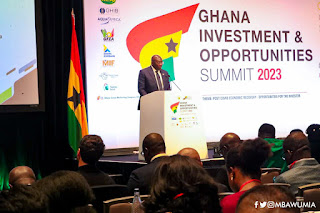
Ghana is back on track with investment opportunities - Veep woos foreign investors
Accra, June 6, GNA-Vice President Mahamudu Bawumia says Ghana's economic opportunities for private sector investors are back on track as...
-
 John E.A Mills died today at a Military Hospital in Ghana. He was 68. He became Ghana's President in 2009 after winning a general ...
 -
 A number of African Heads of State have started arriving in Accra to attend the second conference of the "Partnership with Africa...
 -
 The National Media Commission (NMC) has reconstituted the Board of Directors for State-Owned Media organisations in consultation with Presi...