10.11.06

Chiefs urged to collaborate with the Chamber of Mines

Miss Joyce Aryee, Chief Executive Officer of the Ghana Chamber of Mines, has appealed to members of the National House of Chiefs to collaborate with the Chamber to use mining to promote rapid socio-economic development of the country.
She said the Chamber had embarked on advocacy programmes to ensure that mining benefited Ghanaians, especially those living in host communities and appealed to chiefs to support the Chamber to achieve that objective.
Miss Aryee made the appeal at a meeting with members of the National House of Chiefs in Kumasi on Friday.
She mentioned some of the advocacy programmes as getting the Government to increase royalties paid to host communities and the provision of specific infrastructure and industries in mining communities.
There should also be a deliberate attempt by the Government to attract investment in secondary industries to mining communities and to revive traditional gold refining and produce jewelleries as a way of generating employment.
Miss Aryee said the Chamber was embarking on a training programme for local goldsmiths in the country to improve upon their output.
She said the Chamber was also advocating increased and appropriate compensation for crops destroyed during mining activities and a model housing scheme and real estate designs for resettled communities.
Miss Aryee said all these should be incorporated in the mining lease packages before concessions were granted.
She explained that, the Chamber believed that, if mining were used properly it could make a difference in the country’s development.
She appealed to chiefs in mining communities not to promote illegal mining activities since they destroyed the environment.
Miss Aryee expressed concern about the degeneration of the moral values and norms in the country and appealed to members of the House to use their influence to help to curb the situation.
She appealed to them to declare 2007 the year of moral rejuvenation to help to revive good morals in the Ghanaian society.
GNA

NDC Parliamentarians congratulate Democrats


The National Democratic Congress, (NDC) on Friday pledged to work with
the Democratic Party in the US to achieve international peace and security by using all legitimate and diplomatic means to resolve conflict around the world
In a message to congratulate the party on winning the US mid-term elections, the NDC Parliamentary caucus said, “it will continue to support the call by peace loving countries to withdraw the US troops in Iraq and the victory of the Democratic Party will serve as a catalyst towards the cessation of heinous crimes against humanity in Iraq.”
The US, in their mid term elections last Wednesday took over the Republican controlled Senate and Congress by winning 51 seats in the Senate and gaining total control of Congress.
The message, sent on behalf of the NDC by
the Minority group in Parliament and signed by
its leader, Mr. Alban Bagbin, stated that during the campaign, the Democrats expressed their strong opposition to the war in Iraq and championed the cause of peace.
“In simple terms they said fear must diminish, hope must reign, war must end, peace must take centre stage. Sensation must cease, reconciliation must commence, Rambo-style politics must end, and Kofi Annan style diplomacy must prevail,” the statement noted.
The NDC pledged its support and co-operation for the further enhancement of the good relations existing between the two parties and the two countries.
“We trust that the Democratic Party will look at Ghana and in particular the NDC and support our efforts as we seek and speak of ways of enhancing our democratic culture and our social democratic values,” the statement added.
GNA

French Government pumps money into film development

The effort of the Government to resource educational institutions to enhance the building up of active human resource base for the economic take-off had received massive boost with injection of capital by French Government into the film development.

The French Government, through its local embassy in Accra, had over the last year supported the National Film and Television Institute (NAFTI) with funds and equipment to resuscitate and upgrade the institute to compete favourably with other film and television training centres.

France has been organising a series of workshops, including film critique symposium for NAFTI students, financed the establishment of film dubbing studio, provided editing equipment and cameras, supported the celebration of animation festivals and gave sponsorship to students to attend other seminars across the continent.
Mr Martin Loh, NAFTI Director stated at the seventh Matriculation ceremony of 30 students of the Institute in Accra.

The Director commended the French Government's effort to promote the development of film and television development in Africa and challenged staff and students of the institute to reciprocate the gesture through improved production on Ghanaian screens.


He however, expressed disquiet about the physical expansion of the institute's studio complex, which according to Mr Loh, had been hampered by non-availability of funds over the last 28 years.

He said; "the project which commenced 28 years ago stands out there sleeping, while we scramble for space for teaching, accommodating staff and other academic facilities...no work has been done on it since 1998.”

"Funds approved each year in the Institute's Ghana Government budget support have not been adequate enough to even pay for bringing the contractors back to the site to start work."

Mr Loh, therefore called on the GETFund board to assist in completing the complex as NAFTI has assume the citadel of African film and television development.
On the upgrading of the Institute from a diploma to a degree awarding Institution, the NAFTI Director commended authorities of the University of Ghana, who facilitated the process.

"It's been a long and difficult journey...from a diploma awarding institution to degree level, we are grateful to the University of Ghana for giving us the opportunity to take this great step and for continuing to assist us to build NAFTI into the most respected film school in the sub-saharan Africa and indeed, one of the respected schools in the world," he said.


He said the seventh matriculation for the degree programme confirms that the Institute had made steady progress with teaching at a higher level.

He said the Institute had embarked on collaborative programmes with other tertiary Institutions both foreign and local to enhance teaching and learning, improve upon the type, content and quality of examination questions that would best suit the specific needs of NAFTI.

He explained that film education at a higher level was quite new in Africa and it was therefore not easy to recruit qualified staff to back-up the ageing ones.
Professor Clifford Nii Boi Tagoe, Vice Chancellor
of the University of Ghana called on Africans to use
film and television to project the rich culture of
Africa to the world.

This would enable the continent to assert and gain
a respectable place at the world stage.


He explained that Africans ought to determine their own plans and organize their economies to fight for a respectable share of the world market.


He deplored the continuous dependence of African Governments on foreign donor countries for help, it makes Africans subservient to other people's interest stressing "in today's global village, nations must rise and assert themselves, determine their own goals, plan and organise their economies in order to fight for a respectable share of the world market.

"We cannot do this if we were to continue to wait for help from others outside our continent...I wish therefore to challenge you students as well as graduates of NAFTI to use film and television to restore self confidence in the African, and awaken the spirit of pride and sense of nationalism, especially in the youth, to enable Africa rise and take its deserved place in the global village."
Prof. Tagoe said Africa has rich culture and traditions and exceptional values, "let us exploit them to our advantage.”

The Vice Chancellor said African countries should depend on own creativity and entrepreneurship to create wealth and improve the quality of life of the people.
He also urged educational institutions not to concentrate only on improving teaching and learning but also to initiate plans, which would place their products in a meaningful employment after school.

Mrs. Wilhemina Asmoah, (note ED name is correct) Deputy Registrar, Scholarship Secretariat who chaired the ceremony tasked students and staff to enhance their career.

She said over the years the Government of Ghana, through the Scholarship Secretariat had trained students in various levels and fields, stressing one of the most important scholarships had been the training of lecturers from the various tertiary institutions for postgraduate programmes abroad.

Mrs Asmoah said the Ohio University and the GETFund Board had signed a memorandum of understanding to train Broadcasting professionals over a period.

She tasked the students to take advantage of the enormous challenges and opportunities at the Institute to ensure that they graduated fully prepared, sharpened and skilled to take up greater tasks in film production.
The Registrar of the University of Ghana, Mr Seth Kornu administered the matriculation oath.
GNA

Korle Bu "SURGICAL"suspends admission for next 48 hours


The Korle Bu Teaching Hospital on Friday announced that admission of patients to the Surgical Medical Emergency Unit has been suspended for the next 48 hours.
A statement signed by Mr Mustapha Salifu, Public Relations of the Hospital said the suspension was to enable the hospital to carry out repair works as well as address some operational challenges in the unit.
It said patients who required emergency medical services should call at other hospitals in the metropolis.

9.11.06

Oxfam report-More Children still out school despite all efforts

Four out every 10 Ghanaian children of school going age do not go to school despite the introduction of the Capitation Grant and the Free Compulsory Basic Education programmes, Oxfam, report has said.
The findings form part of the Great Britain's Oxfam new international report for 2006.
It said one in three children would soon be leaving primary school if efforts were not intensified to ensure that they go to school, stay and complete their education.
Mrs. Sonia Kwami, Education Programme Officer of the Oxfam Ghana Office said this when she gave the highlights of the report at a press conference in Accra.
The report, which will be officially launched in December, has the title: "In the Public Interest" and a country level theme, "2007 National Budget should prioritise public health, education, water and sanitation as key to poverty reduction".
"With discussions underway about the 2007 budget, now is a crucial time for the government of Ghana to work on behalf of its citizens and lock in its financial commitment to cutting poverty, improving access to education and overhauling the health care system, hence the highlights of the report", she added.
Mrs. Kwami said education should be a crucial component if Ghana would like to continue with its steady progress towards becoming a leader in the global struggle for parity for the developing world.
She said there was the need for government to invest in essential social services such as education, sanitation and water if Ghana wanted to meet the targets of the Millennium Development Goals in 2015.
She explained that there was a shortfall of 17,612 basic schoolteachers resulting in many school children dropping out of school, adding "Ghana needs about 18,000 more well trained teachers who would be well compensated so they may walk into the classrooms confident and prepared to educate our children".
Citing the recent strike embarked on by the NAGRAT, she called on the government to be paying "decent salaries for those good and competent people who have the responsibility of educating our children”.

Mrs. Kwami noted that Ghana was far behind its pledge in spending 15 per cent of its national budget on providing quality health care to the people of Ghana.
She said government's recent efforts in reforming the national health insurance scheme was a good step, "but will have to triple spending on health in order to meet a goal that was set in solidarity across the Economic Community of West African States".
She said there was need for government to continue with its support and expand of the HIV/AIDS prevention and treatment efforts and be committed to other basic health care needs of the people.
Mrs Kwami urged government to ensure that Ghanaians irrespective of their locality have access to clean and portable drinking water and ensure environmental cleanliness to prevent the upsurge of diseases.
Dr Nii Moi Thompson an economist, who chaired, said the development of the county should be based on human welfare and not on Gross Domestic Product (GDP).
According to him social spending has increased from 30.4% in 1999 to over 40% in 2006 and yet "there has not been any social impact of this increment"
He noted that education; health and water, which were essential for human development, still elude the people and urged government who had the wider option to formulate good policies that would raise domestic resources to deal with the social problems.
GNA

Ghana to be certified as polio-free state


Ghana has succeeded in recording no wild polio virus for three-continuous years, a sign of successful eradiation of polio, Dr Kwadwo Antwi-Agyei, Programme Manager of the Expanded Immunisation Programme of the Ghana Health Service, said on Thursday.
Speaking to the Ghana News Agency (GNA) in an interview in Accra Dr Antwi-Agyei explained that Ghana, since September 2003 recorded no virus and the only way to maintain a polio-free state was to ensure high immunity levels for children under-five years.
He said in 2003 when Ghana was about to complete its third year to be certified as a polio-free state, "We had eight imported cases from February to September from Nigeria and that took us back gain and we started all over again.”
Dr Antwi-Agyei told the GNA that after meeting all the requirements to become a polio-free country, it was left with the World Health Organisation (WHO) to assess and certify the country as polio-free.
"Though we will be certified as polio-free, we will still stand at risk once our neighbour Nigeria had more than 500 cases in 2005 and about 847 cases as at October 3, 2006; we have to intensify our high immunity levels and be alert on our borders."
Dr Antwi-Agyei said though measles was still the leading cause of illness among the vaccine preventive diseases for children under-five years, no death had been recorded for the past two years.
He said there had been a dramatic fall from 13,476 suspected cases in 2001 to 487 cases in 2005 after a large outbreak in 1995, which recorded over 44,000 cases and 85 deaths.
Dr Antwi-Agyei noted that measles was in the early 1980s ranked second to malaria in terms of burden of diseases accounting for 7.3 per cent of the healthy days of life lost through illness, disability and death.
He explained that measures were put in place to control the outbreak, which involved intermittent vaccination. Measles vaccination has since been incorporated in routine immunisation of children at nine months of age.
Dr Antwi-Agyei noted that measles was a highly contagious disease, caused by a virus and its control required very high population immunity and gave the assurance that the vaccines that were given at the just-ended Integrated Child Health Campaign were safe and highly effective.
He explained that indicators used in achieving the fourth target of the Millennium Development Goals, which target the reduction by two-thirds under-five mortality, had a proportion of under-one year old children immunised against measles.
"This can be done if districts attain more than 90 per cent coverage consistently," he said.
He described measles as a killer disease, which when complicated, caused blindness, diarrhoea, sore in the mouth, affected the brain, enteritis and pneumonia. He urged mothers to ensure that their children took the first dose at the age of nine months and the second dose during the campaign exercise which will come off in November.
Dr Antwi-Agyei mentioned symptoms of measles as fever cough rashes and redness of the eyes and urged mothers to watch for these signs and report immediately to the nearest clinic.
He described the last immunization exercise as successful and said there were indications that the target set would be achieved though they were now compiling their reports.
The exercise, which started on November 1 and ended on November 5, combined measles and polio immunisation, administering of vitamin A and distribution of 2.1 million free Insecticide Treated Nets (ITNs) to children less than two years.
About 5.959 million children from 0-59 months were immunised against polio and about 5.065 million children from nine months to 59 months were vaccinated against measles.
There were 9,050 immunisation points, 9,505 vaccinators and 28,514 volunteers to ensure that all children were covered.

Negotiations for teachers still in progress

Negotiations between the Ghana Education Service (GES) and the Ghana National Association of Teachers (GNAT) on salary proposals and collective agreement are still going on, the GES announced on Thursday.

A statement signed by Mr Samuel Bannerman-Mensah, Chairman of the Joint Negotiating Committee, said teachers and the general public would be informed about the outcome “as soon as negotiations are concluded”.
The statement gave no further details.

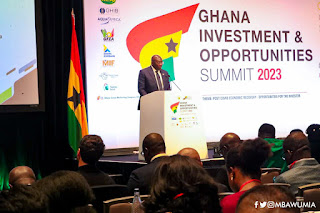
Ghana is back on track with investment opportunities - Veep woos foreign investors

Accra, June 6, GNA-Vice President Mahamudu Bawumia says Ghana's economic opportunities for private sector investors are back on track as...